
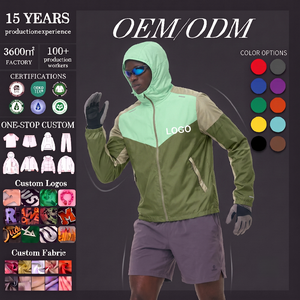
Engineered for high-humidity breathability, multi-directional elasticity, and structural longevity. Available for OEM customization, custom labeling, and flexible volume orders.
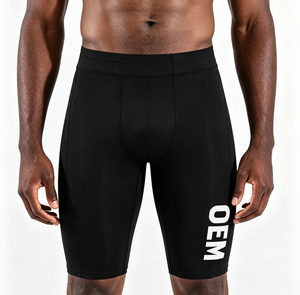
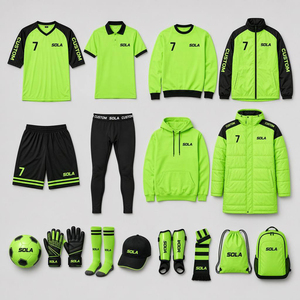
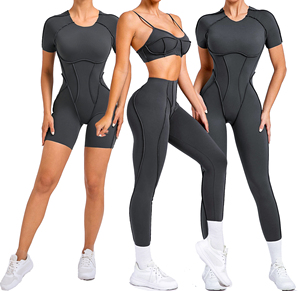
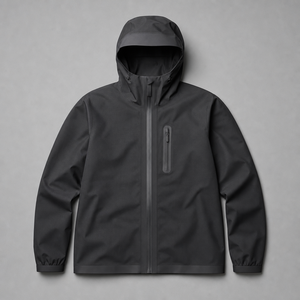
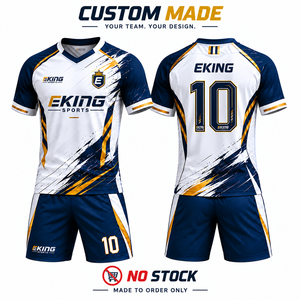
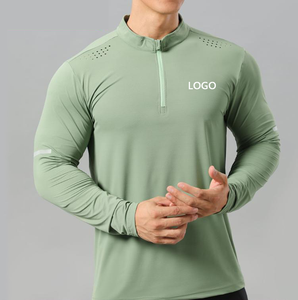
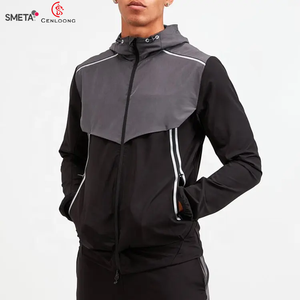
From urban street-marathon conditions to the demand profiles of commercial athletic franchises, custom technical garments must conform directly to Osaka's unique climatic and mercantile terrain.
Summer in the Kansai basin brings temperature spikes exceeding 35°C paired with relative humidity above 75%. Runners along the Yodogawa River trails and participants training for the Osaka Marathon demand textiles with cross-sectional filament micro-grooves. Our 100% moisture-evacuation polyester knits eliminate dermal cling, minimize skin chafing, and sustain rapid evaporative cooling under intense heat stress.
The explosive expansion of 24-hour training centers throughout Osaka's Kita and Minami business districts has escalated consumer expectations for shape retention and opacity. Our 200–240 GSM four-way stretch interlocks undergo rigorous squat-proof modulus testing, providing boutique micro-gyms and fitness franchisors in Chuo-ku with custom-branded activewear that survives repeated 60°C laundering cycles without elastane degradation.
Osaka’s historic commercial business leagues and industrial corporate futsal competitions require dynamic, full-bleed sublimation gear that remains sharp and colorfast. Utilizing high-resolution Italian sublimation inks coupled with air-permeable hexagonal side-mesh venting panels, we engineer complete match uniforms for Osaka athletic clubs that withstand intense friction and slide impact.
In modern performance apparel, the term Quick-Dry (吸汗速乾) has shifted from a mere marketing label into an exact metric governed by capillary action mechanics. Standard circular knits traditionally rely on topical hydrophilic surfactant dips; however, these chemical treatments wash out after 15 to 20 cycles, causing fabric stiffness and heat retention. For brand procurement managers in Osaka, sourcing textiles engineered with inherent geometric capillary channels (such as clover-leaf and cruciform yarn cross-sections) is essential. These physical micro-channels continuously pull moisture from the stratum corneum through differential pressure, dispersing surface sweat across a 300% wider surface area for immediate evaporation.
Furthermore, post-pandemic Japanese athletic apparel retail shows a profound transition toward Athleisure Synthesis (アスレジャー) across Osaka, Sakai, and Kobe. Consumers prioritize activewear that moves smoothly between high-output road running and urban commuter contexts. This requires technical fabrics with matte aesthetic surfaces, high lightfastness ratings (JIS L 0842 Carbon-arc method), and antimicrobial silver-ion infusions to prevent bacterial sweat odors—a crucial hygienic standard for commuters on the Osaka Metro Midosuji Line.
| Textile Metric / Standard | Conventional Circular Knits | Verena Sport Advanced Hydrophobic Spec | Target Sourcing Advantage for Osaka |
|---|---|---|---|
| Drying Rate (JIS L 1907 Droplet) | > 55 minutes to ambient dry | < 18 minutes (High-Velocity Capillary) | Ideal for high-humidity Kansai rainy seasons |
| Color Fastness to Perspiration (JIS L 0848) | Class 3-4 | Class 4-5 (Optical Grade Sublimation) | No dye bleeding in high-friction futsal/rugby play |
| Four-Way Modulus Stretch Recovery | 78% recovery after 100 cycles | 96.4% recovery (DuPont Lycra Matrix) | Zero knee/elbow bagging during cross-training |
| Anti-Bacterial Odor Defense | Surface chemical wash (5-10 washes) | OEKO-TEX Class 1 Extruded Silver Ions | Eliminates post-workout odor during public transit |
Combining the heritage of the world’s leading sporting goods manufacturing cluster in Sialkot, Pakistan, with the strict quality-control expectations of Japan’s corporate athletic sector.
By handling technical yarn knitting, laser pattern cutting, flatlock stitching, continuous dye-sublimation, and export cartonization entirely under one roof in Sialkot, we bypass tier-2 subcontractors. Every lot is checked against AQL 2.5 standards, ensuring seam tensile integrity and dimensional stability across large bulk batches.
Japanese customs clearance and consumer protection laws (Household Goods Quality Labeling Act) demand strict non-toxicity and fiber accuracy. Our facilities operate strictly under certified ISO 9001 quality systems and utilize exclusively OEKO-TEX Standard 100 certified non-carcinogenic, formaldehyde-free inks and dyes.
We routinely manage FOB Karachi to Port of Osaka logistics as well as rapid DDP air-freight corridors into Kansai International Airport (KIX). Our export merchandise specialists provide comprehensive commercial invoices, packaging declarations, and certificates of origin for frictionless customs handling.
Addressing essential technical, contractual, and logistical inquiries raised by corporate sourcing managers and independent sports brand founders across the Kansai area.
We specialize in precise Asian and Japanese sizing metrics (JIS L 4004 / 4005 standards). Compared to European and US profiles, our technical pattern masters adjust sleeve lengths, torso circumferences, armhole depths, and shoulder drops to align cleanly with domestic Japanese fit standards. We work directly from your specialized size specs or supply calibrated master grade tables.
To help emergent activewear brands in Kansai iterate new collections with managed inventory exposure, our flexible tiered MOQs begin as low as 50–100 units per style/colorway for digital sublimation projects. For fully custom yarn-dyed knitted technical fabrics, baseline run thresholds typically average 300 pieces, accommodating scalable growth without prohibitive inventory tie-ups.
Prototypes and fit-samples require roughly 7–10 business days for physical dispatch. Upon approval of the pre-production sample, bulk manufacturing wraps in 30–45 days. Transit via courier directly into Kansai International Airport (KIX) averages 4 to 6 business days, while standard ocean freight consolidation to the Port of Osaka takes roughly 22 to 28 days depending on vessel routing.
Yes. We regularly produce custom woven damask brand labels, heat-transfer neck tags, and satin care/composition wash labels adhering strictly to Japan’s updated JIS L 0001 textile care labeling symbols. In addition, we support retail packaging complete with pre-printed JAN barcodes, SKU tags, and branded polybag specifications ready for direct domestic warehousing.
Partner directly with an established technical manufacturer. From detailed tech pack review and material lab dips to containerized sea shipments, our dedicated export engineering team is ready to scale your performance collections.