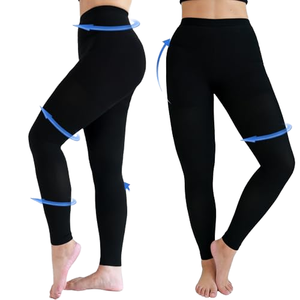
Custom OEM & Private Label performance garments tailored with precision interlock knitting, four-way elasticity, and ergonomic moisture-wicking structures.
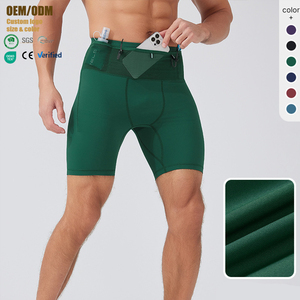
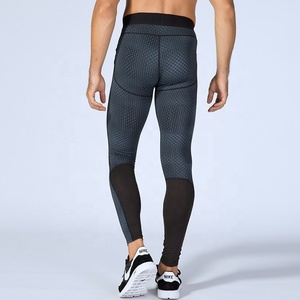
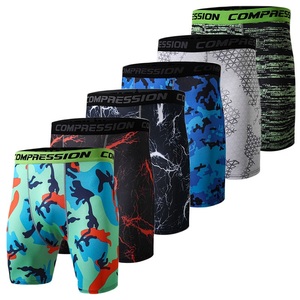
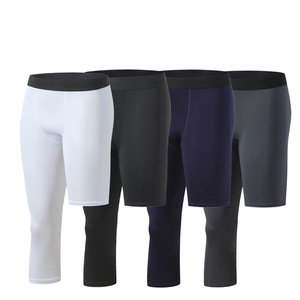
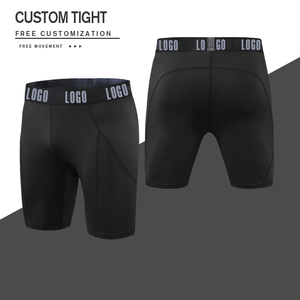
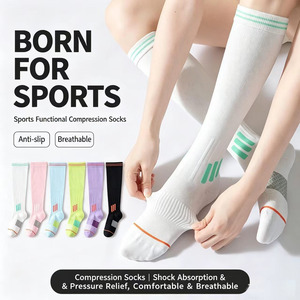
From the iconic Tokyo and Osaka marathons to demanding trail circuits in Mt. Fuji and Hakone Ekiden training runs, our graduated compression textiles solve specific regional mechanical demands.
Continuous impact against hard metropolitan pavement induces chronic muscular micro-trauma. Our tights utilize targeted 20-25 mmHg graduated ankle-to-quad compression to dampen oscillation across the gastrocnemius and iliotibial band, drastically delaying glycogen fatigue during long urban runs.
Trail circuits such as the Ultra-Trail Mt. Fuji demand aggressive vertical ascension and descent kinetics. We integrate multi-directional 4-way stretch 220–280 GSM polyester/elastane composites with abrasion-resistant outer faces to shield athletes against brambles while providing continuous patellar tendon stabilization.
Japan's high-intensity relay culture requires garments that handle extreme metabolic output. High-airflow micro-mesh gusset zones prevent groin heat entrapment, while 360-degree high-candela 3M retro-reflective bonded accents satisfy strict night visibility criteria across suburban roads.
The Japanese performance apparel ecosystem is defined by discerning consumers who demand superior tactile sensation, exacting sizing tolerances, and authentic ergonomic validation. Retail brands and athletic wholesale distributors across Kanto and Kansai are shifting away from generic activewear toward medical-adjacent, functionally graduated compression running gear.
Japanese runners routinely evaluate apparel based on three criteria: dynamic hydrostatic return, hyper-efficient moisture management during the humid monsoon season (Tsuyu), and cold-weather thermal retention for high-cadence winter road running. To achieve high retention and minimal product returns in the Japanese e-commerce and retail landscape, manufacturing lines must enforce tight stitch consistency, calibrated pressure gradients, and skin-friendly hypoallergenic finishes.
| Performance Vector | Verena Sport Technical Specification | Standard Market Benchmark | Benefit to Japanese Sourcing Brands |
|---|---|---|---|
| Fabric Composition | 75/25 or 80/20 Polyamide (Nylon 6.6) / Spandex Interlock | 88/12 Standard Virgin Polyester / Elastane | Silky second-skin handfeel complying with Japanese tactile preferences |
| Compression Mapping | Graduated 15–25 mmHg verified via pressure transducer test | Uniform static stretch (non-graduated) | Legitimate circulatory venous return claim, reducing leg heaviness |
| Seaming Method | 4-Needle 6-Thread Flatlock with bulked soft micro-yarns | Standard overlock 3-thread serging | Eliminates skin friction & pressure lines across 42km marathons |
| Moisture Management | Hydrophilic capillary moisture dispersion < 1.2 sec dry time | Standard topical wicking wash (depletes after 15 washes) | Maintains rapid drying through intense humidity and high sweat rates |
One of the primary friction points for foreign athletic brands entering Japan is the mismatch between Western athletic sizing and the Japanese Industrial Standard (JIS L 4005). Western compression tights typically incorporate longer inseams, broader pelvic circumferences, and larger ankle openings, resulting in bunched fabric at the Achilles tendon and suboptimal venous support. Our technical team works directly from adjusted JIS size blocks:
Calibrated Anatomical Proportions: Shorter inseams, tailored knee-joint pivot placements, and tapered lower-leg diameters ensure graduated compression points land precisely on anatomical lymphatic and venous return zones without rolling, chafing, or constriction.
Headquartered in Sialkot, Pakistan—the globally recognized apex of sports goods manufacturing—Verena Sport integrates complete end-to-end production under an audited ISO 9001 quality framework.
From CAD pattern digitization, laser fabric cutting, four-needle flatlock stitching, to specialized medical-grade silicone gripper application, all manufacturing stages are conducted within our single-roof Sialkot facility to eliminate subcontractor variation.
Our raw textiles comply with OEKO-TEX Standard 100, certifying that fabrics are completely free of harmful azo dyes, phthalates, and formaldehyde. Every production batch undergoes multi-point inline inspections and complete stitch-shear resilience tests.
Proto-samples are finalized within 7–10 days with digital CAD grading. Bulk production cycles range between 30–45 days. We offer seamless sea/air freight routing directly to Port of Tokyo, Yokohama, Osaka, and Kobe with complete bilateral documentation.
Clarifications on technical compliance, import logistics, quality control, and custom tech-pack specifications.
Connect with our technical merchandising team in Sialkot today. Receive full OEM spec sheets, swatches, JIS grade pattern grading guidelines, and export quotes within 24 hours.
Get Catalog