
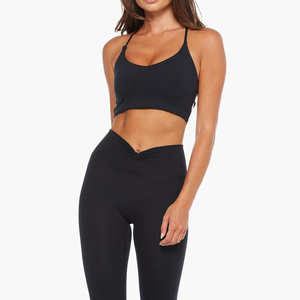
Explore our premium activewear, yoga gear, and technical running apparel lines. Tailored for private label retailers, fitness gym brands, and club athletic distributors.
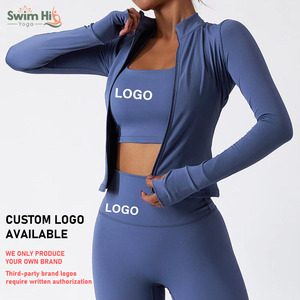
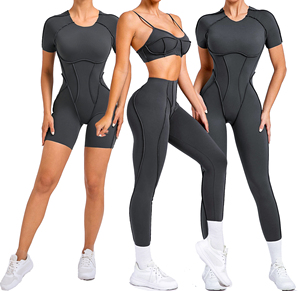
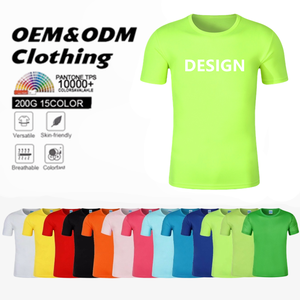
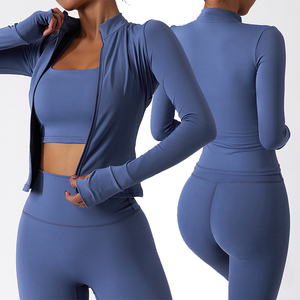
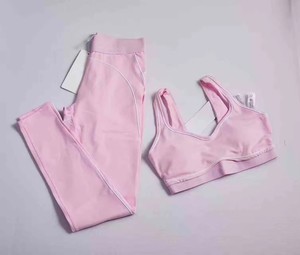
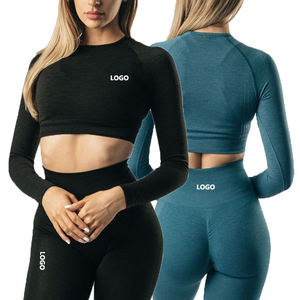

Operating out of Sialkot, Pakistan, our vertically integrated plant provides full technical control over every phase of cut, make, trim, and textile embellishment.
Knitting, laser cutting, flatlock stitching, automated sublimation, and screen printing are housed entirely within our Sialkot facility. Eliminating secondary brokers guarantees strict adherence to specification tolerances.
Over two decades handling FOB, CIF, DDP, and EXW freight logistics into North America, the UK, the European Union, Australia, and the Middle East with comprehensive customs declarations and certificate compliance.
AQL 2.5 standard inspections covering tensile seam resilience, GSM weight accuracy, and colorfastness ratings under prolonged sweat and wash immersion cycles. OEKO-TEX Standard 100 non-toxic certified.
Physical prototypes and 3D digital fit simulations dispatched within 7 to 10 working days. Bulk production cycles complete in 30 to 45 business days, accommodating just-in-time drops and sudden replenishment cycles.
Complete custom branding options including silicone anti-slip grippers, high-definition woven damask neck labels, laser-etched drawcord eyelets, hangtags, barcoded polybags, and retail-ready carton packing.
Fluent English-speaking technical textile engineers allocated to oversee every procurement schedule. Live factory updates via WhatsApp and digital portal ensure continuous transparency across milestones.
As the international athletic and activewear apparel sector accelerates toward technical multi-functionality, procurement directors and sportswear brand founders face shifting sourcing paradigms. Sourcing modern sportswear is no longer just about cutting fabric to generic measurement charts; it requires an integrated mastery of polymer chemistry, ergonomic seam dynamics, ecological traceability, and agile factory batch scaling. OEM apparel manufacturers that operate at the cutting edge must synthesize industrial execution with market research to deliver durable, sweat-resistant, and high-tenacity sportswear.
Over the next procurement cycles from 2025 through 2030, corporate procurement teams are rebalancing supply chain matrices from conventional high-volume single-source hubs toward specialized manufacturing clusters such as Sialkot, Pakistan. The primary procurement drivers shaping contemporary purchase orders include:
Decoupled Near-Cluster Diversification: Enterprise sportswear retailers are actively migrating portions of their production out of saturated territories to hedge against escalating regional labor costs, geopolitical volatility, and tariff shocks. Pakistan’s established sporting goods cluster delivers profound price-to-performance equity without compromising technical sewing competencies.
Low-MOQ Agility for Rapid Inventory Turns: Fast-fashion cycles and community-driven boutique fitness studios require micro-capsules and targeted drops. Suppliers offering dynamic minimum order quantities (MOQs)—ranging from 100 to 300 pieces per colorway rather than legacy minimums of 1,000 pieces—allow athletic brands to maintain healthier cash reserves and reduce inventory write-downs.
Full-Traceability ESG Audits: International regulations in the EU and North America increasingly demand rigorous verification of circular fiber sources. OEM suppliers must prove certified chemical handling (OEKO-TEX Standard 100, REACH compliance) and sustainable post-consumer yarn integrations like GRS-certified recycled polyester (rPET) derived from ocean plastics.
The convergence of professional performance sports with everyday lifestyle wear has elevated technical specifications. Standard cotton-lycra blends have been superseded by specialized polymer yarn configurations tailored for intense friction, thermoregulation, and stretch recovery:
Seamless Circular Knitting Technology: Tubular knit garments eliminate lateral side seams entirely. By engineering variable compression zones directly into the knit profile (high compression at the core, ventilating mesh at heat clusters), seamless sports bras, crop tops, and running tights reduce athletic chafing while expanding range of motion.
Hydrophobic Moisture-Capillary Action: Next-generation moisture-wicking utilizes cross-section channel filaments (such as Coolmax or modified microfiber filaments) that physically pull moisture away from epidermal surface layers via capillary pressure, ensuring flash-drying without relying entirely on chemical wash finishes that wash away over time.
Four-Way Squat-Proof Recovery: Premium women’s fitness leggings require a high spandex/elastane proportion (ranging from 18% to 25%) coupled with high-gauge interlock stitching. This configuration prevents sheer fabric blowout under mechanical elongation (squat-proof guarantee) while preserving 98% dimensional elasticity post-stretching.
| Performance Characteristic | Technical Industry Standard | Verena Sport OEM Factory Specification | Testing & Compliance Protocol |
|---|---|---|---|
| Fabric Composition | Polyester / Spandex / Polyamide | Custom ratios (75/25 Nylon-Elastane, 100% Micro-Poly) | OEKO-TEX Standard 100 / REACH Certified |
| Tensile Seam Durability | Overlock / 3-Thread Seam | 4-Needle 6-Thread Flatlock Ergonomic Stitching | ASTM D1683 Seam Breaking Strength Standard |
| Colorfastness Rating | Class 3.0 to 3.5 | Class 4.5+ (High-Temp Italian Disperse Inks) | ISO 105-C06 Accelerated Laundering Protocols |
| Moisture Dry Evaporation | Evaporation Rate > 0.18 g/h | Dry-Fit Micro Capillary action > 0.28 g/h | AATCC 195 Liquid Moisture Management Standard |
| Fabric Weight Range | 140 GSM to 320 GSM | Tailored: 140 GSM (Racing) to 340 GSM (Winter Track) | ASTM D3776 Standard Test Methods for Mass |
Global wholesale sourcing inevitably involves navigational complexities. Brand founders must manage technical friction points, including measurement tolerance variance across sizing grading systems (US, UK, Asian, and EU fits), batch-to-batch dye lot shade variations, and logistical freight bottlenecks.
Partnering with a seasoned OEM supplier with established standard operating procedures mitigates these variables. Verena Sport institutes comprehensive pre-production checklists, inline QC checkpoints during fabric unrolling to relieve tension-skew, laser-guided pattern cutting to eliminate fabric distortion, and standardized AQL 2.5 final inspections before goods are packed into humidity-resistant export cartons.
Direct technical answers addressing order volumes, sampling lead cycles, proprietary tech packs, and factory compliance protocols.
Our minimum order quantities typically begin at 100 to 200 units per colorway for standard stocked performance fabrics (such as recycled polyester and nylon-spandex interlocks). For fully bespoke fabric weights, exclusive color yarn-dyes, or intricate sublimation printing patterns, MOQs start between 300 and 500 units per style, with proportional size splitting across XS, S, M, L, XL, and XXL.
Upon receipt of your vectorized tech pack, spec sheet, or reference physical sample, our pattern engineering team drafts custom CAD patterns. Prototyping typically takes 7 to 10 working days. We ship fit and proto samples via express courier (DHL, FedEx, UPS) along with fabric swatches, trim cards, and color lab dips for your approval before bulk cutting begins.
We provide end-to-end private label solutions. Branding methods include heat-transferred inner neck labels, damask woven labels, high-density silicone logos, 3D embroidery, tonal flocking, reflective 3M safety transfers, branded silicone hem grippers, engraved metal aglets, embossed zip pullers, and customized eco-friendly polybags with retail barcodes.
Yes. Our in-house design and pattern-making team can generate production-ready tech packs from high-resolution imagery, sketches, or benchmark physical garments. We construct grading charts, determine optimal fabric GSM, select appropriate seam finishes (flatlock, overlock, bonded), and suggest trim components based on your target retail price points.
Our plant operates under certified ISO 9001 Quality Management Systems. We execute a three-tier quality control protocol: incoming raw material fabric inspection (GSM verification, yarn defect checking), inline sewing inspections for tension balance and stitch density (12-14 stitches per inch), and final AQL 2.5 post-production audits measuring visual, dimensional, and packaging fidelity.
We accommodate international trade terms including FOB (Karachi), CIF (air or sea freight to your destination port), and DDP (Delivered Duty Paid direct to your warehouse door). Standard payment frameworks involve a 30% to 50% deposit upon order confirmation to secure technical fabrics, with the remaining balance due upon pre-shipment inspection sign-off via Telegraphic Transfer (T/T) or Letter of Credit (L/C).
Initiate direct communication with our technical sales engineers in Sialkot, Pakistan. Receive immediate feedback on tech packs, sample scheduling, and custom bulk pricing matrices.
Contact Us