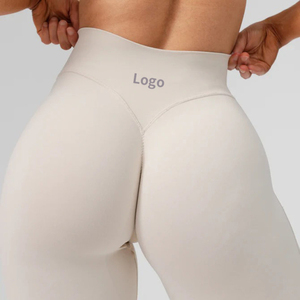
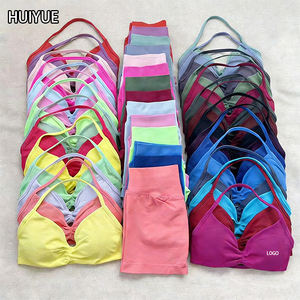
Precision engineered gym wear and activewear manufactured with advanced Santoni seamless knitting, four-way stretch interlock weaves, and squat-proof opacity testing.
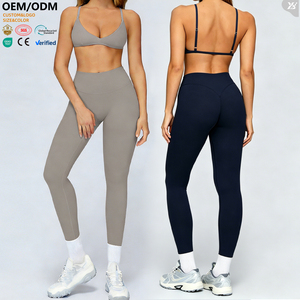
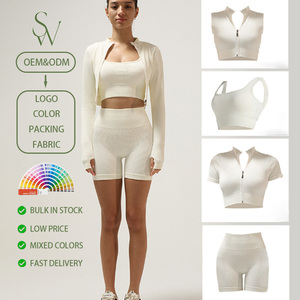
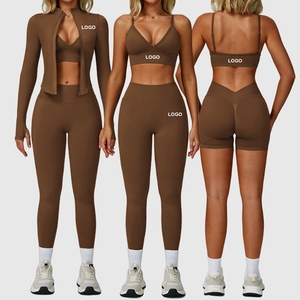
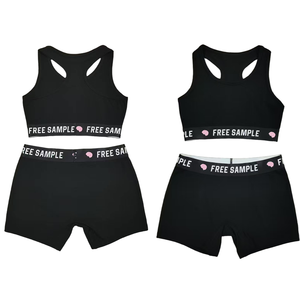
Navigating the macro shifts in global athletic wear manufacturing: decarbonization mandates, smart circular knitting, digital prototyping, and duty-optimized supply networks.
Global brands are phasing out virgin petroleum-based nylon and virgin polyester. Future procurement contracts prioritize GRS-certified (Global Recycled Standard) recycled nylon 6,6 yarn derived from reclaimed fishing nets, bio-based polyamides synthesized from castor oil, and solvent-free elastane. These sustainable polymers deliver identical tensile elasticity and recovery while drastically reducing Scope 3 supply chain carbon emissions.
The traditional back-and-forth physical sample loop of 4 to 6 weeks is being replaced by 3D digital cloth simulation tools (such as CLO3D and Browzwear). Enterprise activewear buyers can test stretch tension, drape, grading across 8 size iterations, and stress-point friction visually in 48 hours before physical fabric cutting begins, shortening development lifecycles from months to days.
To hedge against tariff shocks, freight volatility, and geographic concentration risks, Fortune 500 sportswear labels are embracing dual-hub sourcing. China remains the undisputed global capital for advanced technical microfibers, functional circular knitting machinery, and complex bonded outerwear. Concurrently, Sialkot, Pakistan serves as an optimal zero-tariff, cost-effective partner for sublimated teamwear, cut-and-sew heavyweight fleece, and high-volume training essentials.
An in-depth analysis of high-gauge circular knitting, elastane degradation mitigation, flatlock construction, and multi-zone compression mapping.
Modern athletic clothing has transitioned from passive fashion to functional, biomechanically active equipment. For corporate procurement officers, technical buyers, and private label founders, sourcing premium wholesale gym wear requires an intimate understanding of textile physics, yarn denier, and knit architecture.
1. Seamless Circular Knitting vs. High-Gauge Warp Interlock: Circular seamless technology (predominantly utilizing Italian Santoni machines) eliminates the lateral side seams entirely. By programming computerized tubular needle beds, a single continuous tube can integrate varying knit structures—such as compressive ribbed waistbands, breathable mesh ventilation behind the knees, and honeycombed muscle-stabilizing zones—without a single cut or stitch. Conversely, warp interlock fabrics (such as 50-gauge double-knit brushed Nylon/Spandex) provide superior puncture resistance, structural opacity during maximum squat elongation, and unmatched buttery hand-feel for studio Pilates and yoga applications.
2. Preventing Elastane Fatigue & Seam Shearing: The primary failure point of cheap gym wear is elastane snapping under high shear strain and degradation caused by sweat salts and wash cycles. Industrial-grade manufacturers utilize chlorine-resistant, polyether-based spandex treated with hydrophilic finishes. In cut-and-sew apparel, seams must be executed using ISO 607 flatlock stitching (4-needle, 6-thread) with texturized microfiber threads to match the natural 4-way stretch elasticity of the base textile without thread blowout.
| Performance Metric | Standard Commercial Grade | Verena Export Industrial Standard | Laboratory Test Method |
|---|---|---|---|
| Fabric Composition | 88% Polyester, 12% Spandex | 75% Micro-Nylon 6.6, 25% Creora Spandex | AATCC 20A Yarn Analysis |
| Areal Density (GSM) | 180 - 220 GSM | 280 - 320 GSM (High Modulus Double-Knit) | ASTM D3776 Standard |
| Squat Opacity (Stretch Transmission) | Visible grin-through at 40% elongation | 100% Opaque at 65% multi-axial stretch | Modified Stretch Light Transmission |
| Colorfastness to Perspiration | Grade 3.0 | Grade 4.5+ (Cationic Disperse Dyes) | ISO 105-E04 Standard |
| Seam Tensile Strength | 180 Newtons (Overlock) | 360+ Newtons (ISO 607 6-Thread Flatlock) | ASTM D1683 Seam Rupture |
| Moisture Wicking Velocity | > 5.0 seconds absorbency | < 0.8 seconds instantaneous wicking | AATCC 79 Absorbency Rate |
3. Moisture Management Mechanics: High-performance activewear does not merely absorb sweat; it relies on differential yarn capillarity. By weaving micro-denier filament yarns on the garment interior and coarser macro-filaments on the exterior, sweat is driven outward through moisture-gradient tension, spreading over an expansive surface area for lightning-fast evaporative cooling during high-intensity metabolic conditioning.
Combining advanced Chinese synthetic textile engineering with Pakistani cut-and-sew cost efficiency for global sporting brands.
From in-house computerized yarn warping, knitting, sublimation printing, automated laser cutting to multi-head embroidery and final seam stress tests, 100% of the production sequence is monitored under one roof to prevent subcontracting slippage.
Operating under certified ISO 9001 Quality Management protocols, our quality assurance team conducts 4-point fabric raw material checks, inline AQL 1.5 sewing monitoring, needle detection scanning, and final independent carton auditing before port dispatch.
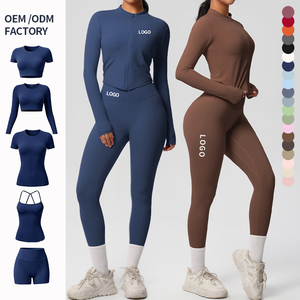
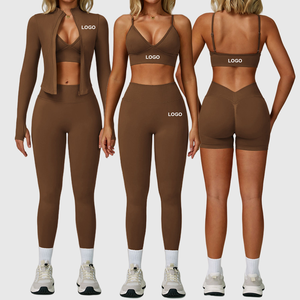
Launch your brand with turnkey OEM services: heat-press tagless labels, custom Pantone-matched woven drawstrings, bespoke jacquard elastic waistbands, silicone 3D badge printing, and barcode-ready branded compostable polybags.
Direct export corridors to North America, the UK, Europe, Australia, and the UAE with flexible incoterms (FOB, CIF, DDP). Enjoy rapid sample delivery in 7–10 days and container-grade bulk shipments delivered within 30–45 days.
Common inquiries from international buyers, activewear importers, and brand procurement directors.
Our standard MOQ is 100 to 300 pieces per style/colorway for ready-stock technical fabric cut-and-sew programs. For custom custom-milled pantone yarn dips or complex seamless jacquard patterns requiring specialized machine re-tooling, our minimum begins at 500 pieces per color across multiple size gradations.
Every batch of dyed synthetic interlock fabric undergoes standardized multi-directional stretch opacity tests. We mount fabric swatches onto calibrated stretch boards under 1,000 lux illumination to calculate light transmission ratios at 50% and 75% strain, ensuring zero shear-through or transparency.
Yes. Our in-house technical merchandising team operates CLO3D and Gerber CAD pattern software. You can submit comprehensive Adobe Illustrator tech packs, dimension specs, physical benchmark samples, or initial 2D sketches; we convert them into production-ready marker patterns within 48 to 72 hours.
Our facilities are certified under ISO 9001:2015 standards, and our fabrics conform to OEKO-TEX Standard 100 (Class II for next-to-skin contact, ensuring absence of harmful aromatic amines, formaldehyde, and heavy metals). We can also provide BSCI social compliance audit documentation and GRS transaction certificates.
Proto and fit samples are finalized and dispatched via courier within 7 to 10 working days. Upon final pre-production sample (PPS) sign-off and lab-dip confirmation, bulk production lines run on a predictable 30 to 45-day cycle depending on order volume and custom trim complexity.
We work with international commercial standards: T/T (Telegraphic Transfer), Irrevocable L/C at sight for institutional bulk orders, and trade insurance accounts. Shipping terms include Ex-Works (EXW), FOB Shanghai/Ningbo/Karachi, CIF to your destination port, and full door-to-door DDP air/sea freight with customs clearance.
Connect with our technical merchandising department for immediate catalog access, wholesale tiered pricing, fabric sample swatches, or custom tech pack reviews.
Contact Us