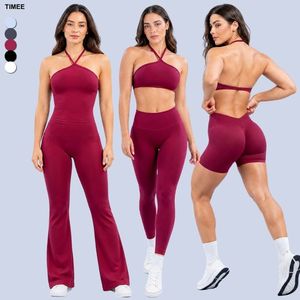
Engineered for professional sportswear brands, athletic distributors, and fitness franchises worldwide. Fully customizable with low MOQs and rapid sampling.
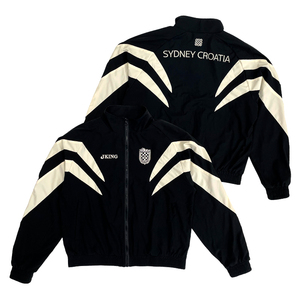
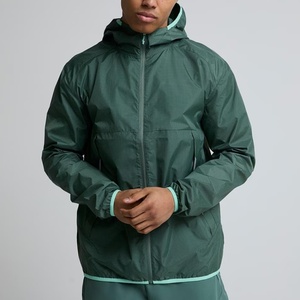
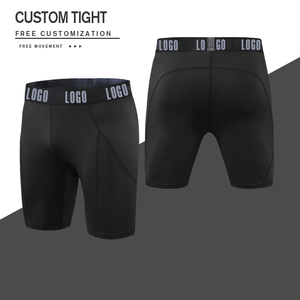
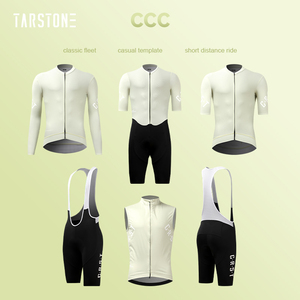
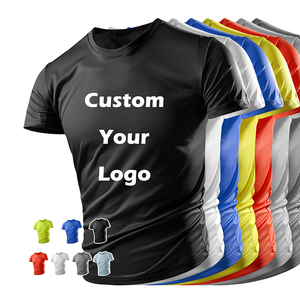
Combining vertically integrated garment assembly, high-precision circular knitting, and full-spectrum custom decoration. Backed by twenty years of global export compliance across ISO 9001 and OEKO-TEX audited workflows.
Yarn procurement, textile knitting, panel cutting, specialized stitching, and finished garment packing are conducted under centralized supervisory control, eliminating supply chain friction.
Extensive trade documentation fulfillment across North America, Europe (CE/REACH), and Australasia, offering flexible Incoterms including FOB, CIF, DDP, and consolidated LCL freight handling.
OEKO-TEX Standard 100 certified non-toxic dye lots, reinforced tensile seam stitching, and SGS/ITS verified colorfastness up to 4.5 grades against laundering and perspiration.
Precise pattern gradation from XS to 5XL, complete tech pack translation, digital CAD prototyping, custom hardware sourcing, woven neck labels, and retail barcoding.
Market shifts are driving brand managers, athletic directors, and procurement executives to rethink their sourcing models. Below is an engineering and commercial analysis of key industry shifts.
The convergence of lifestyle street fashion and high-intensity workout utility requires composite textiles. Brands are heavily prioritizing French terry knitted with recycled elastane blends and water-repellent DWR coatings that maintain breathability during transitions between gym sessions and urban travel.
Corporate ESG directives are reshaping order specifications. Forward-thinking brands are switching from virgin polyester to GRS (Global Recycled Standard) rPET extracted from ocean plastics and post-consumer polyethylene containers, demanding verified chain-of-custody documentation on raw yarns.
The traditional seasonal release paradigm has shifted toward dynamic micro-collections. Importers leverage agile manufacturing infrastructures that accommodate 100-300 unit sample tests before committing to 10,000-unit bulk runs, drastically cutting deadstock risks and warehousing overhead.
| Evaluation Parameter | Traditional Wholesaler Benchmark | Technical Export Engineering Standard | Strategic Advantage |
|---|---|---|---|
| Fabric GSM & Recovery | 220-260 GSM regular poly-cotton | 280-380 GSM High-Density Interlock / 4-Way Spandex | Zero bagging at knees/elbows; lasting structural memory |
| Seam Construction | Standard 3-thread overlock | 4-needle 6-thread Flatlock (ISO 607) | Chafe-free skin contact, 45% greater seam rupture resistance |
| Colorfastness Standard | Grade 3.0 (Commercial dye) | Grade 4.5+ Disperse Dyeing (AATCC 61 Method) | Resistant to chlorinated pools, salt, perspiration, UV breakdown |
| Production Lead Period | 60-90 Days with high variance | 30-45 Days with milestone tracking | Predictable product launches matching retail sales cycles |
A rigorous review of technical activewear requires an understanding of mechanical yarn properties, chemical finishes, and structural garment construction.
We deploy cross-sectional yarn geometries (such as cross-shaped or clover-leaf microfibers) that generate capillary tension. This architecture draws perspiration away from the skin toward outer layers for flash evaporation, keeping athletes dry under intense exertion.
By mapping thermal release zones with computerized jacquard or body-mapped laser micro-perforations, tracksuits retain core muscular warmth while venting heat build-up behind the knee joints, upper back, and axillary areas.
Our decoration units utilize continuous high-temperature sublimation for vibrant team graphics that never crack, high-density silicone heat seals for raised tactile branding, and reflective 3M Scotchlite laminations for enhanced outdoor visibility.
Essential guidance on minimums, testing documentation, customization capacities, and cross-border shipping logistics.
For custom tech packs utilizing standard stock yarn formulations (such as 100% micro-polyester, nylon-spandex, or cotton-terry), our MOQ starts at 100 to 200 sets per colorway, inclusive of mixed sizing. For custom-milled, yarn-dyed jacquard fabrics or unique pantone shades, our typical threshold is 500 sets.
Once CAD files and vector art are verified, proto-sampling requires 7 to 10 working days. Pre-production counter-samples, including full trims, silicone transfer labels, and branded drawstrings, take approximately 12 days. Bulk industrial stitching runs generally take 30 to 45 days after client approval.
We work with international inspection authorities including SGS, TÜV Rheinland, Bureau Veritas, and Intertek. We operate an AQL (Acceptable Quality Limit) 2.5/4.0 standard across raw material shrinkage testing, seam tensile strength checks, needle-detection scans, and carton drop assessments.
Yes. If full digital tech packs are unavailable, our pattern engineering department uses digitizers to construct precise 2D/3D CAD markers directly from your reference garment. We dissect seam layouts, run spectrophotometer scans for precise color matching, and source matching textile blends.
We export to over 50 countries via FOB Shanghai/Ningbo/Shenzhen or CIF/DDP terms directly to your distribution center. Payment settlements are supported through irrevocable Letters of Credit (L/C at sight), standard T/T deposit structures, or open account agreements for verified corporate clients.
We supply recycled polyester, organic GOTS-certified cotton, and biodegradable polybags made from cornstarch (PLA). Retail-ready packaging solutions include FSC-certified card hangtags, heat-sealed anti-tamper polybags, and custom master cartons designed to optimize sea container space.