Engineered for international athletic apparel brands, boutique fitness chains, and commercial retailers demanding ISO 9001 quality compliance, squat-proof opacity, and anatomical compression.
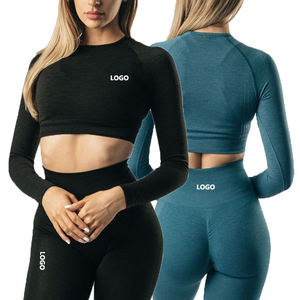
Annual Leggings Output
Global Export Markets
Days Rapid Sampling
Audited Quality Controls
From micro-filament polymer selection and circular Santoni knitting to automated laser slicing and 4-needle 6-thread ISO seam validation, our production network ensures complete supply-chain traceability.
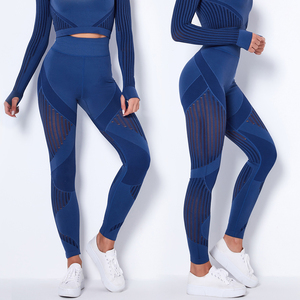
Utilizing high-gauge Santoni seamless knitting machines, we knit anatomical tension zones directly into high waistbands. This eliminates bulky elastic inserts, preventing digging and roll-down during dynamic compound movements.
Opacity failure is the leading cause of return rates in activewear retail. Our internal laboratory tests every fabric batch under stretch conditions using spectrophotometers and high-lux backlight inspection benches.
We deliver turnkey OEM and ODM private label execution for global retailers, emerging direct-to-consumer (DTC) brands, and athletic wholesale distributors with complete brand asset customization.
The global high-waist compression leggings sector is moving rapidly beyond generic polyester-elastane blends. Sourcing directors must track four crucial technological transformations driving brand equity.
Traditional folded waistbands with internal rubber elastic bands often suffer from rolling and pinching. Modern production utilizes ultrasonic perimeter welding and thermo-polyurethane (TPU) bonding films. This creates a paper-thin, ultra-flat silhouette that lies flush against the lower abdominal wall, delivering clean 360-degree core bracing without restrictive constriction.
Consumers prioritize the "buttery-soft / second-skin" sensation popularized by tier-1 global labels. This tactile profile is achieved by pairing micro-denier Nylon 6.6 continuous filament yarns (such as 75D/72F) with double-sided peaching rollers. The result is superior thermal regulation, ultra-low pilling indices (Grade 4.5+ on Martindale testers), and exceptional tactile drape.
Eliminating triangular stress points is vital for durability under high shear forces. Leading technical factories engineer diamond or teardrop ergonomic gussets sewn exclusively with ISO 607 4-needle 6-thread flatlock stitching. Using bulked textured polyester looper yarns, our seams lie 100% planar against the skin, virtually eliminating inner thigh abrasion and blowouts.
| Technical Parameter | Commercial Grade (Low Cost) | Verena Export Standard (High Performance) | Impact on Customer Experience |
|---|---|---|---|
| Fiber Composition | Carded Polyester / Reclaimed Spandex | Nylon 6.6 (Polyamide) + Lycra® Black | Prevents fabric shine, reduces pilling, maximizes recovery |
| Fabric Density | 160 - 200 GSM | 240 - 290 GSM Interlock | Guarantees 100% squat-proof coverage during extreme flexion |
| Tensile Elastic Recovery | < 78% after 50 stretch cycles | > 96.5% Elastic Return Rate | Eliminates bagging around knees, crotch, and waistband |
| Seam Strength | Overlock 3-Thread (< 120 N) | 4-Needle 6-Thread Flatlock (> 280 N) | Survives rigorous martial arts, CrossFit, and powerlifting |
| Color Fastness (Perspiration) | Grade 3.0 (ISO 105-E04) | Grade 4.5+ (ISO 105-E04 Compliant) | Zero dye migration to athletic footwear or light car upholstery |
Enterprise sourcing executives are re-architecting activewear supply chains. Navigating geopolitical shifts, environmental mandates, and omni-channel inventory volatility requires partnering with proactive manufacturing hubs.
With the European Union implementing the Digital Product Passport (DPP) and strict EPR directives, leggings made from unidentifiable polymers face stiff border hurdles. Enterprise procurement is pivoting toward chemically recycled GRS-certified nylons (such as Econyl® or ocean-waste polyesters) paired with bio-derived solvent-free elastanes that allow straightforward end-of-life depolymerization.
Annual bulk buys are being replaced by agile replenishment frameworks. Retailers now order conservative initial runs (300 to 500 units per colorway) to test algorithmic traction across social commerce channels. Once sell-through benchmarks are met, manufacturers must execute programmatic bulk repeat runs within 20 to 25 production days using greige fabric reservation agreements.
Global markets demand hyper-accurate grading charts. Rather than linearly increasing waistbands, modern activewear grading uses 3D biometric morphometric data to calculate proportional changes across the gluteal apex, high hip, and crotch depth. Manufacturers providing digitized 3D Clo3D fitting assets substantially compress sample lead times while reducing downstream eCommerce size exchanges.
Direct technical answers addressing the critical legal, operational, and material considerations faced by professional sourcing teams, quality directors, and apparel brand founders.
Waistband roll-down is caused by improper tension ratios between the inner and outer waistband layers or a lack of anatomical taper. We engineer our high-rise bands with a 12-to-15-degree inward trapezoidal contour, ensuring the circumference at the top edge matches the natural taper of the human ribcage. Furthermore, we can integrate ultra-thin localized silicone micro-dots or a bonded interior elastane ribbon to lock the waistband against active movement.
For versatile year-round wear, 240 to 260 GSM interlock knit represents the gold standard. Fabrics under 210 GSM risk sheer opacity when flexed under fluorescent gym lighting. Conversely, fabrics exceeding 300 GSM become excessively heavy, retain moisture longer, and induce unwanted thermal buildup during high-intensity interval training (HIIT) or hot yoga.
All export consignments are inspected under ANSI/ASQ Z1.4 (ISO 2859-1) Level II Normal Sampling standards. We mandate an Acceptance Quality Limit of AQL 1.5 for critical structural defects (seam blowouts, skipped flatlock stitches, needle cuts) and AQL 2.5 for minor cosmetic variations (thread trim cleanliness, heat transfer positioning tolerances within ±1.5mm). Full inspection reports with calibrated photos are submitted prior to bill of lading generation.
Elastane slippage occurs when low-quality bare spandex strands break away from polyamide fibers during thermal heat-setting or aggressive machine laundering. We utilize high-tenacity, double-covered air-jet interlaced elastane yarns. Thermal stentering temperatures are digitally calibrated to exactly 185°C ±2°C, preserving yarn elasticity while locking dimensional stability across hundreds of wash cycles.
Standard proto and fit samples are dispatched within 7 to 10 working days from tech pack confirmation and greige fabric selection. For custom dyed-to-match (Pantone TPX/TCX) fabrics, lab dips require 3 to 5 days. Our flexible production MOQ starts at 300 to 500 units per colorway for cut-and-sew leggings, and 800 to 1,000 units for fully customized seamless circular-knitted runs.
Women's synthetic compression leggings are classified under HS Code 6104.63 (trousers, bib and brace overalls, breeches and shorts, of synthetic fibres, knitted or crocheted). We operate under FOB (Shanghai, Ningbo, Karachi) or full CIF/DDP terms for air freight and ocean freight to major sea gateways across North America, Europe, Australia, and the Middle East.
Transform your high waist leggings line with factory-direct engineering, lab-certified squat-proof fabrics, and dependable global delivery. Speak directly with our activewear production engineering team today.