In high-intensity endurance athletics, marathon training, and sprinting, modern compression running tights serve as critical physiological instruments rather than mere sportswear. Sourcing from accredited Chinese manufacturing clusters unlocks proprietary circular-knit architectures, warp-knit elastic stability, and medical-grade graduated compression gradients (15–25 mmHg) designed to minimize muscular oscillation, accelerate venous return, and mitigate delayed-onset muscle soreness (DOMS).
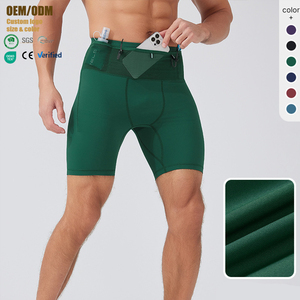
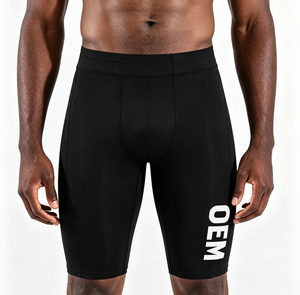
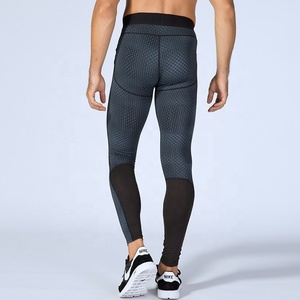
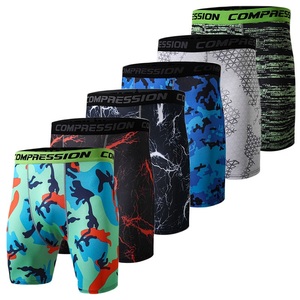
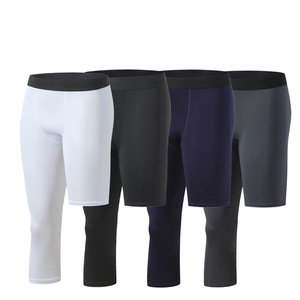
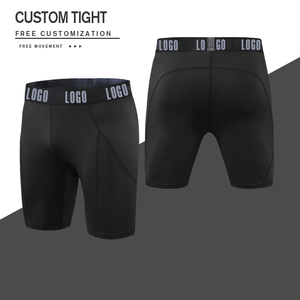
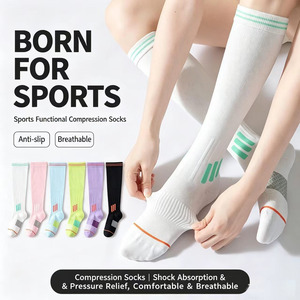
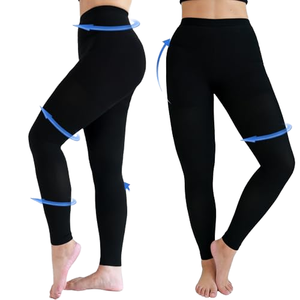
True athletic compression is fundamentally distinct from standard elastic apparel. While standard activewear tights employ entry-level 4-way stretch fabrics simply to contour over the leg, medical-grade compression running tights utilize engineered warp-tricot or high-gauge interlock circular knits. These construction paradigms apply sustained mechanical pressure across specific skeletal muscle bellies, particularly targeting the gastrocnemius, soleus, quadriceps, and hamstrings.
During the repetitive impact shock of road and marathon running, muscle groups vibrate violently upon heel strike. This muscular oscillation dissipates kinetic energy, damages muscle micro-fibers, accelerates fatigue, and spikes post-exercise serum creatine kinase levels. By partnering directly with a specialized Chinese exporter, international sportswear brands integrate targeted elastic tension matrices that stabilize deep tissue, mitigate micro-trauma, and optimize proprioceptive feedback.
Furthermore, Chinese high-tech factories integrate calibrated graduated compression. Pressure follows a hydrodynamic gradient: maximum compressive pressure (100%, commonly 18–22 mmHg) at the distal ankle zone, tapering systematically to 70% at the mid-calf, and decreasing to 40–50% across the femoral popliteal zone. This pressure variance stimulates the skeletal muscle venous pump, improving deoxygenated blood velocity toward the vena cava and preventing metabolic waste accumulation (lactate clearance acceleration).
Procurement teams navigating the 2025–2030 sourcing cycles must anticipate major raw material evolutions, tightening sustainability audits, and circular-knitting breakthroughs.
Traditional multi-panel tights require 12 to 18 cut pieces stitched together with flatlock seams. The future belongs to Santoni circular machines knitting variable-denier microfibers directly into tubular compression sleeves, creating localized tension zones without stitch lines, cutting friction coefficients to zero.
Supply chain regulations across the European Union (Corporate Sustainability Due Diligence Directive) and USA require verified post-consumer recycled polyamide and bio-based elastane (Creora bio-spandex synthesized from industrial corn starch). China's chemical fiber giants now lead global production of 100% GRS-certified performance blends.
Cutting-edge compression fabrics now embed bioceramic mineral powders directly into the core matrix of extruded yarn filaments. These minerals absorb the runner's emitted body heat and reflect it back into underlying muscle tissue as Far Infrared Rays (FIR), vasodilation, while micro-encapsulated Phase Change Materials (PCM) absorb latent thermal spikes.
Sourcing decision-makers must evaluate technical activewear factories based on measurable laboratory metrics. Below is an engineering comparison illustrating the performance differentials delivered by premier compression wear factories:
| Performance / Sourcing Parameter | Premier Chinese Technical Exporter | Conventional Generic Garment Mill | Functional Impact on Athletic Performance |
|---|---|---|---|
| Elastic Modulus Decay Rate | < 4.8% tension loss after 100 wash cycles | 18.5% – 32.0% tension collapse within 20 washes | Maintains therapeutic graduated compression over 12+ months of runner usage. |
| Seam Shear Strength (ASTM D1683) | > 220 N (Four-Needle Six-Thread Flatlock ISO 607) | 90 N – 120 N (Standard Overlock Stitches) | Zero blowouts along high-torsion inner thigh and hamstring seams during sprints. |
| Fabric Opacity / Squat-Proof Metric | Zero sheer transparency at 85% elongation (CIE Lab tested) | Visible undergarment show-through beyond 40% elongation | Critical customer satisfaction factor; eliminates product returns for female & male lines. |
| Moisture Vapor Transmission (MVTR) | > 8,500 g/m²/24hr (JIS L1099 B-1 Inverted Cup) | 3,200 – 4,100 g/m²/24hr | Instantaneous perspiration evacuation, stopping runner chafing and skin scald. |
| Colorfastness to Perspiration (ISO 105-E04) | Grade 4-5 (Disperse dye micro-suspension fixed at 190°C) | Grade 2-3 (Bleeding and ghosting into lighter trim) | Prevents graphic fading and staining under aggressive acidic athletic sweat conditions. |
| Sampling & Bulk Turnaround Time | 7–10 Day Rapid Sample; 30–45 Day Bulk Container | 21–30 Day Sample; 75–90 Day Bulk Turnaround | Rapid inventory turn, streamlined seasonal drops, and agile stock replenishment. |
Combining 20+ years of industrial sportswear craftsmanship, vertical yarn integration, and ISO-certified quality engineering to protect your brand reputation.
Every operational node—from raw yarn drafting, computerized knitting, laser fabric cutting, to digital sublimation and 4-needle stitching—operates under one consolidated management roof. Fewer sub-contractors directly translates to zero handover friction and immaculate stitch uniformity.
Certified operational quality management with strict chemical safety protocols. All textiles, drawstrings, elastics, and sublimation inks comply with Class 1 skin-contact benchmarks, guaranteeing zero forbidden amines, heavy metals, or hazardous plasticizers.
Serving world-class performance brands, specialty marathon retail chains, and collegiate teams across the USA, Canada, United Kingdom, European Union, Australia, and the Middle East. Complete fluency in international customs clearance, FOB/CIF terms, and duty documentation.
Transforming complex tech packs and 3D CLO render files into shelf-ready retail collections. We accommodate custom branded jacquard elastic waistbands, laser-cut bonded zipper pockets, high-visibility reflective transfers, and bespoke compostable packaging.
Equipped with computerized automated spreading tables and Gerber cutting plotters, initial fit samples are dispatched within 7 to 10 working days. Commercial bulk runs consistently ship within 30 to 45 days post sample sign-off, protecting your critical marketing calendar.
Every lot undergoes inline four-point fabric inspection, seam pull-force tensiometer testing, hydrostatic moisture release checks, and final packaging audits. Third-party testing agency inspections (SGS, Intertek, TUV) are welcomed and seamlessly coordinated.
Essential guidance covering technical specifications, compliance verification, MOQs, and export logistics for procurement officers.
We test compression garments using pneumatic transducer pressure testing systems (such as the Salzmann MST MK IV and Hohenstein Medical Compression Systems). Tests are conducted on standardized leg mannequins conforming to EN 12718 / RAL-GZ 387 medical standards. Calibrated pressure readings ensure that compression reduces progressively from distal (ankle) to proximal (thigh) zones before commercial bulk packaging.
Our flexible OEM infrastructure supports varying business stages. Standard custom dyed-to-match (Pantone PMS) solid colorway orders typically start at 300 to 500 units per style (across mixed sizes S to XXL). For digital sublimation printed designs or styles leveraging our core stocked technical yarns (polyester-spandex/nylon-spandex blends), we accommodate rapid lower-MOQ launch runs from 100 to 200 units.
Opacity without excessive weight is achieved via high-density double-knit interlock weaving and micro-filament yarn technology (75D/72F or finer). By tightly interlacing the front and back yarn matrices, the textile retains 100% opacity even under severe two-dimensional stretch (>80% radial expansion), preventing sheer visibility while keeping fabric weight between an optimal 200 to 240 GSM for running.
Yes. Marathon running apparel requires bounce-free containment for large smartphones, energy gels, and soft hydration flasks. We engineer ultrasonic bonded bounce-free side thigh cargo pockets, envelope-style internal waistband pockets, and waterproof center-back zippered lumbar pockets utilizing SBS/YKK semi-lock zips and moisture-barrier thermal PU membranes.
We deploy authentic Four-Needle Six-Thread Flatlock machines (Yamato & Pegasus stitchers) conforming to British Standard ISO 607. Seams are sewn using super-soft textured micro-filament nylon or woolly poly thread on the underside. The seam lies totally planar against the epidermis, eliminating abrasive friction during repetitive leg stride cycles.
We routinely export under Incoterms 2020 including FOB (Shanghai / Ningbo / Shenzhen / Qingdao), CIF, and DDP (Delivered Duty Paid directly to client warehouses in North America, Europe, and the UK). Full documentation suits—including Commercial Invoices, Packing Lists, Certificates of Origin (Form A/REX), and Material Safety Data Sheets (MSDS)—are dispatched promptly.
Request our comprehensive 2025/2026 Sportswear Tech Catalog, containing complete fabric swatch specs, graduated compression pressure charts, and factory OEM pricing tiers.
Get Catalog