Engineered with precision circular knitting, high-gauge polyamide/elastane matrices, and strict adherence to European Personal Protective Equipment (PPE) Class I ergonomics and OEKO-TEX Standard 100 ecological criteria.
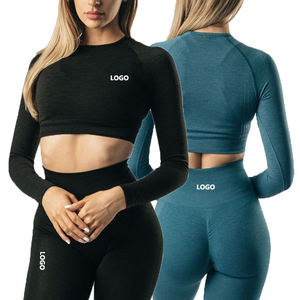
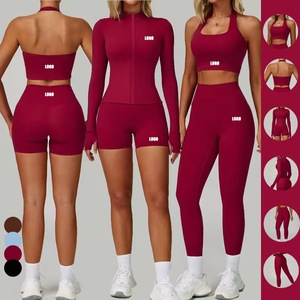
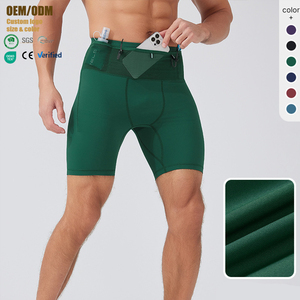
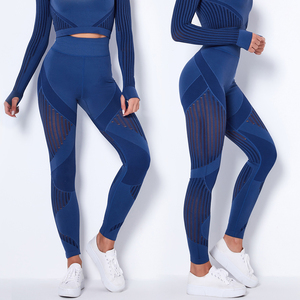
A rigorous examination of European Union regulatory frameworks, biomechanical displacement dampening, and advanced circular tubular knitting kinematics for professional apparel sourcing specialists.
In the global sportswear landscape, technical sports bras designed for high-impact activities increasingly intersect with regulatory definitions governing protective body wear. In the European market, while fashion garments require general textile safety conformity, activewear engineered specifically for biomechanical shock attenuation, breast ligament strain protection, and compression stabilization is evaluated under Personal Protective Equipment (PPE) Regulation (EU) 2016/425 (Category I for ergonomic mechanical stress reduction) and standard EN ISO 13688 (General requirements for protective clothing).
As an export-dedicated manufacturer located in the renowned textile and surgical industrial epicenter of Sialkot, Pakistan, Verena Sport engineers seamless sports bras that systematically satisfy the comprehensive chemical, physical, and ergonomic performance criteria demanded by CE and EU apparel safety directives. CE certification for our high-impact compression sports bras verifies compliance with REACH Annex XVII regulations regarding banned azo colorants, phthalates, nickel discharge thresholds, and heavy metal limits. Furthermore, every batch of microfiber polyamide 6.6 and air-covered elastane utilized in our Santoni seamless knitting lines undergoes strict third-party verification under OEKO-TEX Standard 100 Class II (direct-to-skin contact articles), providing global brands with documented proof of skin tolerance and zero chemical irritation during strenuous sweat-inducing activity.
B2B Technical Takeaway: Procuring CE-certified seamless sports bras eliminates customs regulatory clearance bottlenecks within the EU single market. It delivers certified evidence of mechanical integrity, dimensional stability under prolonged hydrothermal exposure, and absolute absence of endocrine-disrupting chemicals across the supply chain.
Traditional sports bra construction relies upon assembling 12 to 18 individual fabric panels joined through flatlock, overlock, or coverstitch seams. These localized seams introduce structural shear lines, friction points against epidermal layers, and stress concentration zones susceptible to elastic thread rupture during rigorous tensile cycles. In contrast, our Santoni circular knitting machinery produces three-dimensional cylindrical body preforms directly from digital yarn feeding programs.
By modulating stitch loop structures—interchanging jersey knit, double-face rib, mock-mesh eyelet, and high-tension tuck stitches on a single computerized machine cycle—we engineer targeted compression zones across the pectoral girdle without a single physical cut or seam. The bra's underband utilizes double-folded tubular elastane bands knitted continuously into the breast cup structures, eliminating elastic band detachment, rolling, and chafing.
| Performance Parameter | Verena Sport CE Seamless Bra | Conventional Cut-and-Sew Bra | Compliance Test Benchmark |
|---|---|---|---|
| Displacement Reduction (3D Biomechanics) | Up to 72% vertical / 64% lateral damping via zoned 3D compression | 42% - 54% (localized pressure points along seam lines) | ISO 20957 / High Impact Dynamic Ergonomics |
| Fabric Tensile Recovery (Elastane Creep) | > 96% elastic return after 5,000 cyclic loading passes at 40% elongation | 82% - 88% (seam thread slippage and differential elastic decay) | ASTM D4964 / EN 14704-1 Tension & Elongation |
| Seam Failure & Chafing Potential | Zero bust-zone seams; 100% monolithic circular tubular torso | 14-18 individual seams with micro-abrasive thread friction | Martindale Abrasion ISO 12947-2 (>50,000 cycles) |
| Thermal & Moisture Vapor Resistance (Ret) | Ret < 3.8 m²Pa/W (extreme breathability via zoned jacquard venting) | Ret > 6.5 m²Pa/W (multi-layered overlapping seam barriers) | Sweating Guarded Hotplate ISO 11092 |
| Harmful Substance & Chemical Safety | OEKO-TEX Class II & REACH Annex XVII Certified (Zero Azo / Lead) | Varies across trim, zipper, and fabric subcontractors | EN ISO 14362-1 / CE PPE Directive Toxicology |
Combining the centuries-old manufacturing excellence of Sialkot with state-of-the-art European production systems, end-to-end vertical integration, and an export pedigree spanning over 50 global consumer markets.
Every operational tier—from technical yarn warping and Santoni circular knitting to sublimation printing, laser perforation, silicone bonding, and packaging—is managed entirely in-house at our Sialkot facility. Eliminating external sub-contractors secures uncompromising intellectual property confidentiality, rapid design iterations, and rigid quality control.
Since 2005, Verena Sport has been engineering athletic garments for premier retail chains, DTC challenger labels, and fitness licensing conglomerates across the United States, United Kingdom, Germany, Australia, and Canada. Our specialized export documentation team ensures rapid customs compliance under FOB and CIF terms.
We deploy a rigorous 4-stage inline inspection workflow based on AQL 1.5 standards: yarn modulus verification, grey fabric continuous inspection, sewing/bonding micro-checks, and 100% individual garment dimensional checks post-boarding. Our ISO 9001 certified Quality Management System provides full traceable audit trails.
In modern athleisure commerce, speed-to-market defines commercial survival. Our computer-aided seamless pattern programming station converts your 2D vector sketches or complex 3D Clo3D CAD files into physical Santoni sample preforms within 7 to 10 working days, backed by a predictable 30-to-45 day bulk production turn.
We do not merely supply commodity garments; we build proprietary brand equity. Our private label program incorporates jacquard knit-in logos, reflective micro-transfer prints, high-frequency silicone emblems, bespoke woven neck labels, RFID-embedded barcodes, and FSC-certified recyclable retail packaging.
Communication friction causes supply chain failures. At Verena Sport, global sourcing managers communicate directly with dedicated textile engineers and export merchandisers. We provide weekly photographic production milestones, real-time video link machine walkthroughs, and prompt technical feedback.
Examining material innovations, bio-synthetic polyamides, ultrasonic bonding integrations, and smart biometric textiles defining the 2025–2030 athletic apparel frontier.
Environmental governance is compelling brands to phase out virgin petroleum polyamides. The future of seamless activewear belongs to post-industrial recycled Nylon 6.6 (such as Q-NOVA and ECONYL) and bio-based nylon synthesized from non-food castor bean oil (Polyamide 4.10). These sustainable polymers replicate identical thermal stability, tensile recovery, and ultra-soft buttery tactile hand-feel while shrinking lifecycle carbon footprints by up to 48%.
While tubular bodies eliminate lateral seams, necklines, armholes, and back racer straps traditionally require lockstitch hems. Cutting-edge manufacturing is transitioning to ultrasonic cutting coupled with thermoadhesive elastic film bonding (Framis Italia). This produces featherweight zero-bulk hems that lie completely flat against the skin, preventing chafing and extending aerodynamic performance in elite racing environments.
Thermal regulation is advancing beyond passive capillary wicking. Next-generation circular seamless knits integrate yarns embedded with micro-encapsulated paraffin waxes (Outlast technology) that absorb, store, and release latent body heat. When skin surface temperature rises during intense training, the yarn absorbs thermal energy; during cool-down intervals, it releases heat, preserving optimal muscle temperature.
The athletic apparel market is converging with health technology. Seamless knitting cylinders now facilitate the exact insertion of silver-coated nylon conductive tracks directly into the sports bra's sub-bust ribbing. These embedded textile electrodes seamlessly link to miniature snap-on transmitter pods, monitoring heart rate variability, respiration rate, and core temperature without restrictive chest straps.
Strategic procurement analysis for chief supply chain officers seeking to balance unit economics, ESG compliance, and supply chain continuity.
In standard cut-and-sew garment manufacturing, fabric waste generated during pattern marker cutting averages between 18% and 24%. In an era of escalating raw polymer costs and strict EU Extended Producer Responsibility (EPR) mandates, this pre-consumer waste represents both an economic deficit and an ecological liability. Seamless knitting generates under 3% raw material scrap, as yarn is fed in precise stoichiometric quantities required to knit the exact garment shape. Global procurement officers are reallocating capital expenditure away from traditional cut-and-sew vendors toward seamless circular factories to safeguard both gross margins and Corporate Sustainability Reporting Directive (CSRD) disclosures.
Over-reliance on monolithic manufacturing regions exposes global brands to severe supply disruption, tariff volatility, and surging labor rates. Sialkot, Pakistan, has evolved beyond its traditional dominance in football manufacturing to become an international center of excellence for technical performance apparel. Featuring lower operating cost structures, dedicated export infrastructure (including the privately owned Sialkot International Airport for expedited air shipments), and generations of skilled textile artisans, Sialkot provides an optimal counterbalance to mitigate supply chain concentration risk.
The rise of digital-first athleisure brands and seasonal capsule collections has rendered legacy factory minimum order quantities (10,000+ units per color) obsolete. Modern procurement frameworks demand agile manufacturing partners capable of producing initial pilot runs of 500 to 1,000 units for market testing, with the verified capacity to scale to 500,000 units upon demand validation. Verena Sport balances this spectrum through modular circular machine banks that can be rapidly re-programmed between production batches.
Direct technical answers addressing certification standards, manufacturing minimums, private labeling mechanisms, and export logistics.
We provide a comprehensive EU Declaration of Conformity (DoC), technical dossiers demonstrating adherence to EN ISO 13688 standards, and accredited third-party test reports (from labs such as SGS, Bureau Veritas, or Intertek) verifying REACH Annex XVII compliance, zero banned azo dyes, lead-free trims, and skin-neutral pH tolerances.
Our standard production MOQ is typically 500 pieces per style/colorway across standard size distributions (XS to 3XL). For established global private labels launching multi-product collections, we offer flexible tier structures and blended MOQs across coordinated sets (such as sports bra and matching seamless legging combinations).
Yes. Over 85% of our production is strictly custom OEM/ODM development. You can submit full Adobe Illustrator tech packs, Clo3D digital rendering files, or physical reference benchmark samples. Our textile engineers program the Santoni knitting files, match Pantone references via lab dip strike-offs, and engineer customized graduated compression profiles.
Fit, proto, and sales counter-samples are delivered within 7 to 10 working days. Following official sample sign-off and lab dip approval, bulk mass production takes approximately 30 to 45 calendar days, contingent upon yarn availability and order complexity. We coordinate air freight (3-5 days transit) or ocean container shipping (18-28 days).
We primarily knit with Polyamide 6.6 (Nylon 6.6) air-jet textured microfibers blended with double-covered Spandex/Lycra (elastane content ranging from 12% to 28% depending on target compression rating). We also provide recycled GRS-certified Nylon 6.6, virgin polyester blends, cationic heather yarns, and modal/bamboo linings for antibacterial properties.
Our quality assurance protocol follows MIL-STD-105E / AQL 1.5 standard. We evaluate yarn tensile consistency, perform continuous four-point fabric checks, test stretch recovery on calibrated tensile machines, verify dimensional tolerance after three industrial wash cycles (ISO 6330), and execute 100% aesthetic inspections for snagging, loose threads, and color accuracy.