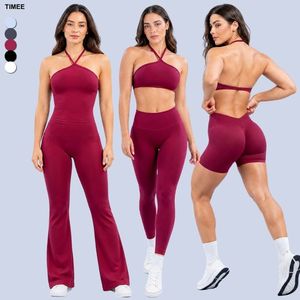
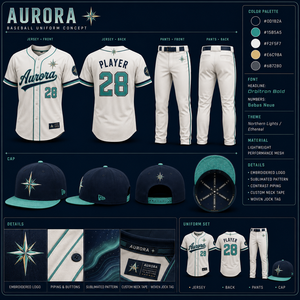
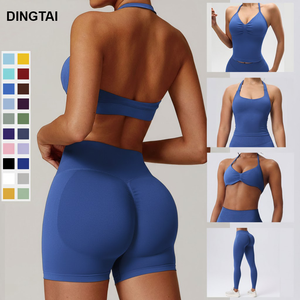
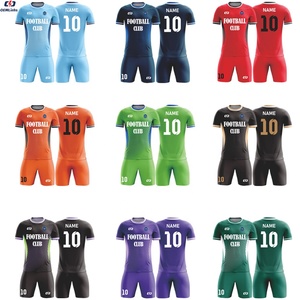
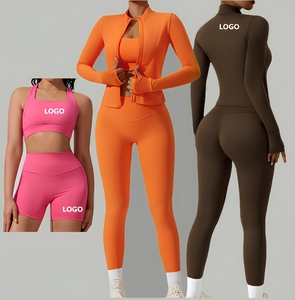
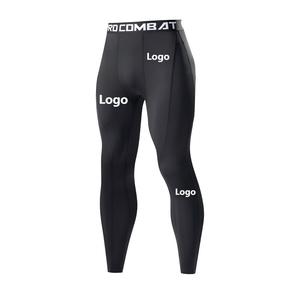
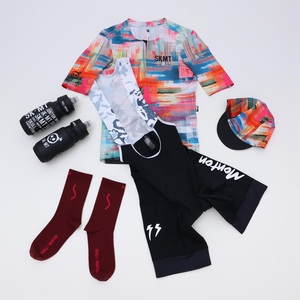
Engineered at our Sialkot manufacturing hub using anti-chafing ergonomic construction, certified non-toxic technical knits, and precision flatlock micro-stitching.
In the global endurance sportswear landscape, "CE Certification" is frequently misunderstood by brand merchandisers. While general casual apparel falls under broad textile labeling directives, competitive marathon running gear intersects directly with the European Union Personal Protective Equipment (PPE) Regulation (EU) 2016/425 when high-visibility features or specific physiological support elements are claimed. Furthermore, entering the European Economic Area demands rigorous conformance to EN 17353:2020 (enhanced visibility equipment for medium risk situations), alongside the strict chemical thresholds dictated by REACH (EC) No 1907/2006 Annex XVII.
At Verena Sport, our technical apparel engineers build CE-compliant marathon gear from the polymer level up. Sourcing OEKO-TEX Standard 100 Class II certified textiles, our garments guarantee zero presence of carcinogenic aromatic amines, NPEOs, organotin compounds, or heavy metal residues. Long-distance road racing exerts extreme physiological stress: runners endure continuous skin-to-fabric shearing over 42.195 kilometers. A failure in flatlock micro-seaming or improper moisture management can cause severe chafing, tissue maceration, or thermal exhaustion. Our vertical manufacturing model guarantees audited consistency from master yarn spooling to finished export carton.
| Compliance Standards | EU 2016/425 PPE Cat II, EN 17353:2020 Type B3, REACH SVHC <0.1% |
|---|---|
| Yarn Construction | 50D/72F micro-denier recycled polyester / recycled Polyamide 6.6 with RoICA elastane |
| Moisture Permeability | MVTR > 12,000 g/(m²•24h) (JIS L 1099 B-1 Inverted Cup Method) |
| Capillary Wicking | Wicking height > 120 mm / 10 min (AATCC 197 Vertical Strip Method) |
| Fabric Weight Options | Ultra-light 65 gsm racing mesh to 220 gsm graduated compression knits |
| Seam Technology | Ultrasonic bonded edge hems, welded tape reinforcements, flatlock stitching |
| Color Fastness | Grade 4.5+ to domestic laundering (ISO 105-C06) and perspiration (ISO 105-E04) |
| Inspection Protocol | AQL 1.5 / 2.5 inline automated tension control + 100% finished garment verification |
Located in Sialkot, Pakistan—the globally recognized epicenter of sporting goods manufacturing—we deliver complete vertical agility with zero intermediate agent commissions.
We control yarn procurement, laser cutting, automated sewing, sublimation printing, screen printing, reflective heat-welding, and packaging under one ISO 9001 certified roof. By eliminating third-party sub-contractors, we prevent production bottlenecks and secure strict lot-to-lot color matching.
Over two decades of servicing the United States, United Kingdom, European Union, Australia, and GCC regions. Our in-house export trade specialists oversee customs documentation, Form A origin declarations, automated packing manifests, and sea/air freight booking for transparent delivery terms.
Whether you supply a full CAD tech pack or an athlete-tested reference sample, our pattern engineering department utilizes Gerber CAD systems to build multi-size grading, customized woven neck branding, eco-friendly FSC-certified hangtags, and barcode-ready polybagging tailored to your retail shelves.
Quality control is never a retrospective check at our facility; it is built into the workflow. We implement raw material incoming inspections, inline tension and needle calibration monitoring, 4-point fabric grading, and complete pull-force testing on zip pullers and reflective adhesives.
Avoid losing sales windows due to delayed spring marathon product launches. Our dedicated R&D sample room creates functional prototypes and custom-dyed lab dips in 7 to 10 working days. Commercial bulk runs are reliably dispatched within 30 to 45 calendar days following sign-off.
Bridge the time-zone gap without communicative ambiguity. Global corporate buyers communicate directly with dedicated textile engineers and production managers who provide photo and video step-by-step progress reports at cutting, embroidery, sublimation, and post-ironing stages.
How international brand directors, purchasing consortiums, and retail allocators are recalibrating their marathon apparel supply chains for resilience, legislative compliance, and carbon transparency.
Supply chain vulnerabilities and geopolitical tensions have accelerated the "China + 1" and "China + 2" strategies across North America and Europe. Enterprise buyers are shifting large-scale cut-and-sew orders to established South Asian industrial clusters. Pakistan’s GSP+ market access to the European Union and tariff competitiveness in duty-free synthetic teamwear create measurable margins of 14% to 22% over East Asian manufacturers.
By 2026, the Ecodesign for Sustainable Products Regulation (ESPR) will mandate digital traceability across all textile products imported into the EU. Procurement directors must source from factories with documented Tier-2 and Tier-3 transparency. Verena Sport provides verified batch certificates detailing yarn origin, water consumption metrics, non-toxic dye inputs, and verified circular polyester feedstock (rPET) credentials.
The era of committing to rigid 5,000-piece single-color drops 9 months in advance has ended. Modern running labels demand core base collections paired with limited-run race capsule editions. Our flexible cell-based modular sewing floors allow buyers to test smaller production batches (200-300 units per style) with swift replenishment triggers once sell-through velocity is proven.
Modern competitive marathoners measure performance in split seconds. Discover the manufacturing breakthroughs redefining thermal management, wind resistance, and muscular stabilization.
Derived from elite cycling speedsuits, marathon apparel now integrates micro-textured surface patterns on upper shoulder panels and chest yokes. These 3D ribbed channels induce controlled micro-turbulences that keep airflow attached longer, diminishing aerodynamic drag by up to 4.2% at target race paces between 16 km/h and 21 km/h.
To safeguard runners against hypothermic shock in rain-swept marathons or heat stress during late-race segments, we apply microscopic paraffin wax micro-capsules directly onto fabric fibers. These PCMs actively absorb latent body heat as surface temperatures rise and release that thermal energy as external temperatures decline, keeping athlete skin temperatures stabilized around 33.3°C.
Standard thread seams present raised profiles that inevitably produce frictional shear across sensitive epidermal tissue over 30,000 running strides. By employing ultrasonic welding machines alongside elastomeric adhesive bonding films (Framis Italia), we engineer completely flat, weightless, water-repellent seams that eliminate abrasion while delivering 200% mechanical recovery.
Straightforward technical and commercial answers designed for international athletic brand directors, supply chain heads, and custom race merchandise managers.
For technical running gear incorporating reflective safety trims, we supply certified Type Examination Certificates according to EN 17353:2020 issued by accredited European Notified Bodies (such as SGS or SATRA). Additionally, we provide complete laboratory chemical test reports proving compliance with REACH Annex XVII (covering azo dyes, nickel release, cadmium, lead, and phthalates) and certified OEKO-TEX Standard 100 Class II declarations for every textile batch dispatched from our factory.
Our standard production baseline is 300 units per style/colorway, which can be split across standard retail size distributions (XS through 3XL). For fully sublimated event jerseys or club teamwear utilizing stock technical fabrics, our minimum begins at 100 units. For custom mill-dyed pantone fabrics with bespoke elastane composition and antimicrobial finishes, fabric minimums are 500 kilograms (approximately 2,000 to 2,500 singlets or lightweight tees).
Garment sizing drift in high-elastane athletic fabrics is primarily caused by inconsistent fabric tension during resting and cutting. We subject all incoming rolls to a mandatory 24-hour tensionless de-crimping relax period on automated spreading cradles before feeding into computerized Gerber CNC vacuum cutters. All sewing operations are guided by acrylic master templates and calibrated digital stitch counters, guaranteeing dimensional tolerance variations remain well within ±0.5 cm of tech pack specs.
Yes. If you do not possess complete CAD tech packs, you can courier an existing benchmark sample or athlete prototype to our Sialkot facility. Our pattern development team will digitally digitize the garment geometry, conduct fiber content spectrometry, determine yarn linear mass density (denier) and fabric weight (gsm), and reverse-engineer an identical or superior prototype complete with your custom branding within 7 to 10 working days.
We operate under standard international commercial terms, offering both FOB Karachi / Sialkot International Airport and CIF to any major global seaport or hub. For initial orders, we operate via 30% T/T deposit upon sample approval with the 70% balance due against copy of original Bill of Lading (B/L) and commercial invoice, or via Irrevocable Confirmed Letter of Credit (L/C at sight) for institutional volume tenders. Long-standing partners are eligible for open credit accounts.
We treat intellectual property with utmost contractual gravity. Prior to reviewing tech packs, vector art, or proprietary pattern curves, we execute enforceable bilateral Non-Disclosure Agreements (NDAs). We never re-sell, distribute, or publicly exhibit our private label clients' custom cut-and-sew blocks or unreleased graphics to other competing brands or wholesale channels.
Connect with our technical merchandising team in Sialkot today. Receive full access to our comprehensive product catalogs, performance fabric swatch decks, and rapid quotation breakdowns within 24 business hours.