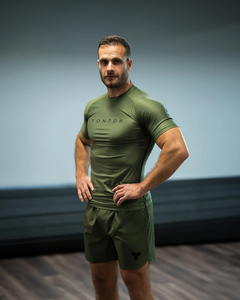
From water-repellent micro-ripstop running jackets to fully sublimated teamwear shells, explore our precision-tailored export portfolio designed for international brands, sports federations, and retail chains.
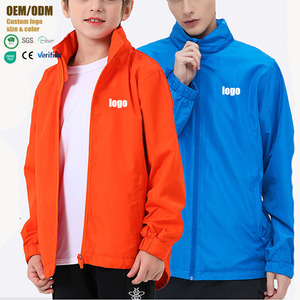
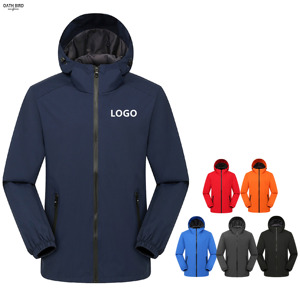
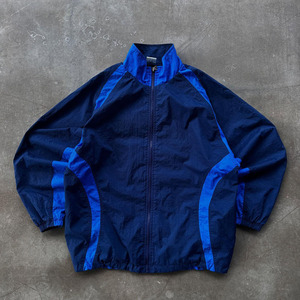
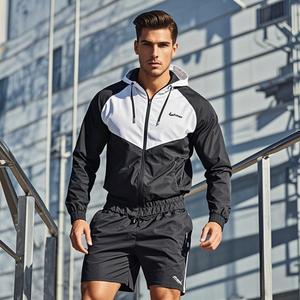
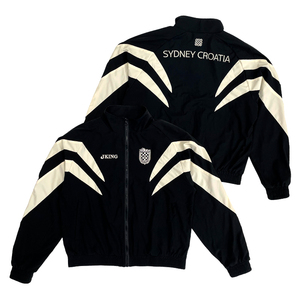
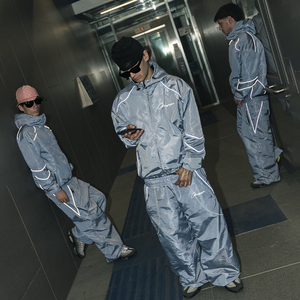
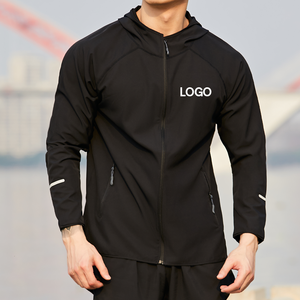
Procuring performance outerwear for European, North American, and global sports retail demands strict alignment with CE standards, international textile safety certifications, and robust mechanical performance. As an established sportswear manufacturer rooted in Sialkot, Pakistan, our fully integrated operations transform complex technical packs into high-precision, audit-ready garments.
In technical sportswear manufacturing, the term "windbreaker" has shifted dramatically from a simple nylon barrier into an engineered microclimate shell. Today's commercial athletic buyers require precision balances across air permeability (measured via ASTM D737 / EN ISO 9237), hydrostatic water head resistance (EN 20811 / ISO 811), and moisture vapor transmission rate (MVTR via JIS L 1099 or ISO 11092 / RET methods). Achieving compliance with European Union harmonized standards—such as EN 343 for protective foul-weather apparel and EN 17353 for enhanced day/night visibility—requires meticulous control over every raw material tier.
Fully documented testing protocols for hydrostatic water resistance (Classes 1–4) and water vapor resistance (RET). All documentation, declaration of conformity (DoC), and technical files are maintained for B2B customs clearance and import compliance.
We deploy strictly OEKO-TEX Standard 100 Class I & II certified raw synthetics, waterborne polyurethane coatings, and PFC-free bio-based C0 durable water repellent (DWR) chemistries that eliminate hazardous fluorocarbons.
Our 20-year manufacturing heritage in Sialkot, Pakistan concentrates laser cutting, micro-taping, digital dye-sublimation, computerized embroidery, and rigorous inline AQL 1.5 / 2.5 quality control directly under one roof.
| Performance Specification | Standard Athletic Windbreaker | CE Certified Storm-Proof Shell | Pro-Athlete Race Ultralight |
|---|---|---|---|
| Base Fabric Composition | 100% Micro-Polyester 50D Taffeta | 3-Layer Nylon 6.6 Ripstop (40D-70D) | 100% Recycled Polyamide 20D Ripstop |
| Water Column (EN 20811) | 3,000 mm – 5,000 mm H2O | 15,000 mm – 20,000 mm H2O | 8,000 mm – 10,000 mm H2O |
| Breathability Rating (RET) | RET < 12 (Moderate Activity) | RET < 6 (High Aerobic Output) | RET < 3 (Extremely Breathable) |
| Seam Sealing Technology | Critical Seams Taped (2-layer PU) | 100% Fully Taped (3-layer 13mm Hot Melt) | Ultrasonic Welded + Micro-Taped Seams |
| Target Application | Team Warmups, School Clubs, Lifestyle | Mountain Running, Cycling, Alpine Training | Marathon Competitions, Ultra-Distance |
| Certification Standard | ISO 9001 / OEKO-TEX | CE EN 343:2019 / EN 17353 | CE EN ISO 13688 / REACH |
A sports shell jacket cannot earn legitimate CE compliance by fabric selection alone. The harmonized testing framework evaluates whole-garment seam slippage (ISO 13936-2), mechanical burst resistance, toxicological clearances under EU REACH (Annex XVII for phthalates, azo dyes, and short-chain chlorinated paraffins), and dimensional stability after repeated domestic laundering (ISO 6330). Our internal testing laboratory executes these checks prior to shipment dispatch.
International brand sourcing directors and athletic purchasing managers face changing regulatory frameworks, evolving athlete expectations, and supply chain rebalancing. Understanding where sports outerwear procurement is heading provides competitive positioning over the next five years:
Procurement contracts are transitioning toward circular design. Brands are mandating 100% single-polymer garments—where the outer shell, membrane, lining, zipper tapes, and cords are manufactured entirely from Polyamide (Nylon) or rPET (Recycled Polyethylene Terephthalate)—eliminating end-of-life separation hurdles.
With the European Chemicals Agency (ECHA) and individual US states enforcing strict per- and polyfluoroalkyl substances restrictions, commercial purchasers must eliminate C8 and C6 fluorocarbon treatments. Our plant specializes in bio-derived polyurethane coatings and silicone-based water-shedding agents.
Traditional multi-round physical prototyping is being replaced by 3D digital garment twin simulation (CLO3D). This shrinks the development loop from 30 days to 72 hours, enabling high-volume brands to execute agile production drops and responsive seasonal colorway replenishers without stock-outs.
Sourcing organizations are shifting from high-tariff, single-origin procurement centers toward specialized manufacturing ecosystems. Sialkot, Pakistan presents a time-tested duty advantage, established infrastructure, and comprehensive export logistics directly connecting to European and American deep-sea ports.
Windbreaker engineering has evolved past basic woven polymers into responsive micro-climatic outer garments. The fusion of ergonomic kinematics and composite lamination empowers athletes to train across harsh conditions without heat entrapment or weight penalties.
Modern sports windbreakers utilize hydrophilic and microporous membrane structures. Microporous coatings incorporate trillions of microscopic pores per square centimeter—pores that are 20,000 times smaller than a water droplet, preventing rain penetration, yet 700 times larger than a water vapor molecule, allowing metabolic perspiration to exhaust continuously. By combining these membranes with backer fabrics ranging from 15-denier circular knits to laser-channeled jacquards, our engineering facility crafts shells weighing less than 110 grams that withstand 50 knot wind gusts.
Every windbreaker shell leaving our assembly line embodies proprietary sewing, welding, and ventilation technologies engineered over decades of bespoke teamwear and activewear manufacturing:
Founded in 2005 in Sialkot, Pakistan, Verena Sport operates fully in-house production floors. We bridge the gap between custom tailoring and high-capacity industrial production.
Eliminating intermediaries is fundamental to controlling apparel margin, brand confidentiality, and speed-to-market. Here is why international sportswear brands rely on our manufacturing footprint:
Procuring directly from our Sialkot factory cuts trading agency surcharges by 18% to 28%. We operate raw fabric stocking agreements and automated high-yield pattern nesting, passing raw efficiency straight into your BOM costings.
From grading custom European or US size specs to weaving branded neck labels, custom silicone pullers, individual barcode polybags, and retail hangtags—we engineer finished products ready for immediate distribution.
Our dedicated sample room produces production-ready prototypes in 7 to 10 days. Clients test fit, check fabric hand-feel, and test weather-resistance in field scenarios prior to committing to commercial cut-and-sew production runs.
Sourcing teams must resolve technical, regulatory, and logistics variables before issuing purchase orders. Here are detailed responses to common inquiries from commercial apparel buyers:
Our manufacturing runs can be supported by third-party testing documentation (SGS, Intertek, or TÜV) validating EN 343:2019 for water penetration and breathability, EN ISO 13688 for ergonomics and garment sizing, EN 17353 for visibility performance, and OEKO-TEX Standard 100 Class II compliance confirming our textiles are free from harmful aromatic amines, pesticides, and chlorinated phenols.
We offer structured MOQs to support emerging direct-to-consumer athletic brands as well as volume retailers. For fully customized windbreakers using stocked in-house fabrics (100% micro-polyester, nylon ripstop), our MOQ starts at 50 to 100 units per colorway across blended sizing. For custom-milled pantone-matched technical membranes or bespoke woven jacquard weaves, minimums typically begin at 300 to 500 units.
Yes. We specialize in contract OEM and ODM sportswear manufacturing. Our pattern engineering team accepts Gerber, Lectra, Adobe Illustrator, or PDF tech packs. We accommodate custom grade rules (US, EU, UK, Asian fits), customized hood shaping, specialized pocket placement, audio cord routing, thumb-loop cuffs, and proprietary cut-lines.
Applying graphics to coated, water-repellent fabrics requires specialized chemistry to prevent peeling or leaking. We provide all-over digital sublimation (for untreated poly surfaces), high-density screen printing with cross-linking agents, 3D silicone badges, high-frequency TPU heat seals, and retro-reflective heat-transfer transfers that maintain adhesion through 50+ wash cycles without puncture damage.
Our ISO 9001 certified workflow follows a multi-stage Quality Management System (QMS). First, raw materials undergo a 4-point fabric inspection. Second, cut panels pass digital template checks prior to sewing. Third, inline technicians inspect seam strength, stitching tension, and tape-seal temperature every 30 minutes. Finally, 100% of finished jackets undergo measurement audits and AQL 1.5/2.5 final random inspections prior to packing.
Pre-production fit and sales samples are delivered within 7 to 10 business days. Upon final tech-pack signoff, lab-dip signoff, and deposit verification, bulk manufacturing requires approximately 30 to 45 business days depending on volume complexity. Sea freight transit times range from 18 to 28 days to European/US West Coast ports; express air cargo runs 4 to 7 days for fast turnaround.
We regularly execute international commercial shipments under Incoterms 2020: FOB (Karachi Port / Sialkot Dry Port), CIF (named destination port), CFR, and DDP (Delivered Duty Paid via courier air freight). Commercial payments are conducted through secure T/T wire transfers or Irrevocable Letters of Credit (L/C at sight) for enterprise volume agreements.