A private label activewear manufacturer produces apparel that carries your brand, not the factory’s name. This may include leggings, sports bras, training shorts, jackets, and performance tops. The manufacturer can support fabric selection, technical design, sample development, sizing, labeling, packaging, and production. Your logo is only one part of the product.
Brand strategist Marty Neumeier offers a useful reminder: “A brand is not what you say it is. It’s what they say it is.” That idea matters in activewear. Customers judge a garment through touch, stretch, recovery, stitching, fit, and performance after washing. A polished label cannot hide transparent fabric or a waistband that rolls during training.
An experienced private label activewear manufacturer should explain its minimum order quantities, production timeline, quality checks, fabric certifications, and sample revisions. Ask to see measurable details. Check GSM, fiber content, colorfastness, seam strength, and size grading. Request a physical sample before approving bulk production.
The process is rarely tidy. A sample may fit well but feel too warm. A recycled fabric may look appealing yet pill after repeated use. Some factories communicate quickly but offer weak technical support. Others deliver excellent samples but miss deadlines.
That uncertainty deserves honest evaluation. Choosing a manufacturer is not simply a search for the lowest price. It is a decision about consistency, customer trust, and long-term brand experience. A reliable partner helps turn an idea into activewear that people can confidently wear, wash, and buy again.
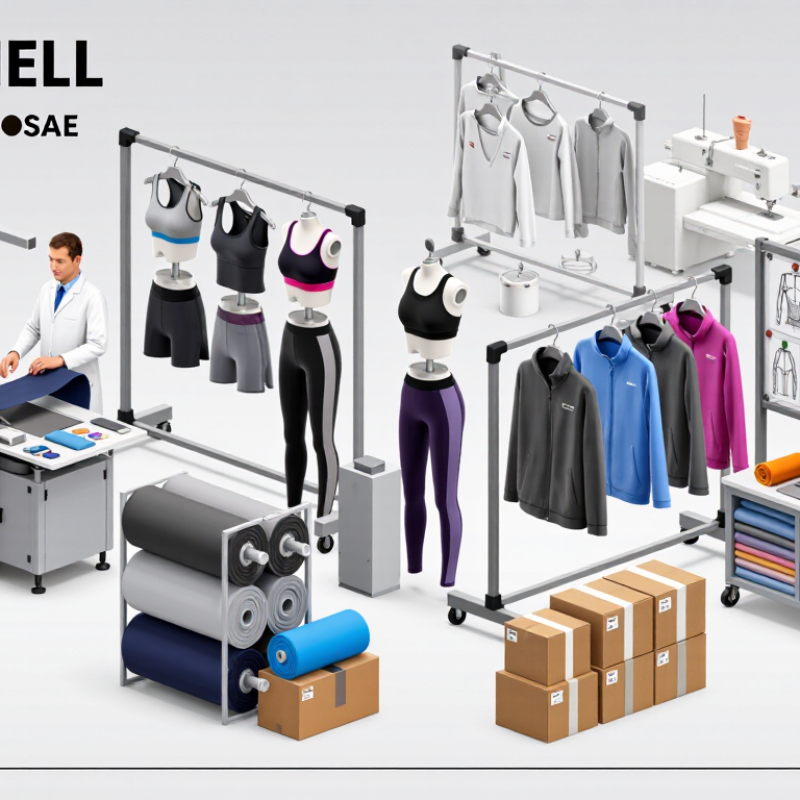
A private label activewear manufacturer produces fitness garments that carry a buyer’s label. The buyer owns the product concept and market positioning. The manufacturer manages development and production.
Typical services include fabric sourcing, pattern making, size grading, sampling, sewing, quality inspection, and packaging. A detailed tech pack helps prevent costly misunderstandings. It should specify fabric composition, GSM, stretch recovery, seam construction, measurements, labels, and color standards.
The market is expanding quickly. Allied Market Research valued the global activewear market at USD 319.4 billion in 2021. It projects USD 547.7 billion by 2030, with a 6.7% compound annual growth rate. Grand View Research estimated the global sports apparel market at USD 203.4 billion in 2023. Its forecast suggests a 6.8% CAGR from 2024 to 2030. These categories overlap, so the figures should not be treated as identical.
A reliable manufacturer should provide development samples and measurable inspection records. Ask about fabric testing, colorfastness, shrinkage, and seam strength. A low minimum order quantity can be helpful. It may also increase the unit cost. The model is useful, but not flawless.
Production experience matters. Small details often decide whether leggings remain opaque during movement. Waistband recovery matters too. A beautiful sample can still fail after repeated washing. Buyers should test real wear, not only review photographs.
A private label activewear manufacturer develops and produces clothing that is sold under another company’s label. The typical workflow includes product development, sampling, bulk production, and quality control. The timeline below shows common industry planning ranges, which may vary according to fabric selection, order volume, customization, and shipping requirements.
Private label activewear manufacturing lets a business sell garments under its own label. The manufacturer manages production, while the client defines the product direction. This may include leggings, sports bras, jackets, or training tops. The process usually begins with a product brief. It describes measurements, fabric performance, colors, stitching, labels, and packaging details.
A technical designer converts that brief into a tech pack. The factory then selects suitable materials, such as recycled polyester blends or stretch nylon. Fabric weight matters. It affects support, breathability, drying speed, and comfort. A sample follows, often after several questions about fit and construction. The first sample is rarely perfect. Waistbands can roll, seams may pull, or pockets can sit too low.
After fitting, the manufacturer adjusts the pattern and creates a revised sample. Wear testing should include squats, running, stretching, washing, and repeated movement. These checks reveal problems that photographs cannot show. Quality teams inspect fabric shade, seam strength, measurements, labels, and finishing. They also compare bulk production against the approved sample. Size grading comes later, because one pattern cannot serve every body shape equally well. That part requires judgment. Mistakes still happen when communication is vague or approval records are incomplete. Clear measurements and written comments reduce those risks. Once production begins, controlled inspections help identify defects before packing and shipment.
A private label activewear manufacturer develops products sold under a retailer’s or studio’s name. Its service begins with product development, not sewing alone. Teams translate a brief into sketches, tech packs, fabric choices, and graded size specifications. They may create leggings, sports bras, shorts, jackets, socks, and coordinated sets. Sampling tests stretch recovery, opacity, seam strength, moisture management, and fit during movement. Useful manufacturers also provide wear trials and revise patterns after real feedback. This step is often underestimated. Grand View Research valued the global activewear market at approximately US$412.3 billion in 2024, with continued growth projected through 2030. That scale increases demand for reliable development systems, not just low unit prices.
Production services can include material sourcing, color matching, labeling, packaging, quality inspections, and shipment coordination. Some factories support recycled or certified fibers, but documentation must be checked carefully. Textile Exchange reported that polyester represented about 59% of global fiber production in 2023, showing why fiber traceability matters in activewear decisions. A credible partner should disclose testing methods, tolerances, factory locations, and corrective-action procedures. It should also explain minimum order quantities and lead times before sampling begins. Ask for test reports. Then test samples independently when the fit or fabric feels uncertain. A manufacturer can offer excellent prototypes yet struggle with bulk consistency. That contradiction deserves attention. Pricing, communication speed, and technical judgment should be reviewed together, because a cheap sample cannot repair repeated production defects.
A private label activewear manufacturer produces garments designed and sold under another company’s label. The buyer usually controls fabric, fit, colors, labels, packaging, and order quantities. This model suits growing fitness businesses that need a distinctive product without building a factory. Grand View Research estimated the global activewear market at about USD 412 billion in 2023. Its projected growth makes product differentiation increasingly important.
The main benefit is control. A business can adjust waistband pressure, pocket depth, seam placement, and fabric weight for a specific customer group. Private label production may also improve margins through direct sourcing and repeat orders. However, the process is not automatically cheaper. Minimum order quantities can leave hundreds of leggings in storage. Sampling, grading, testing, and freight add hidden costs. A poor forecast can damage cash flow quickly.
Quality management requires practical experience. Ask for fabric test results, size specifications, color standards, and pre-production samples. Textile Exchange reported that polyester represented roughly 59% of global fiber output in 2023, while recycled polyester remained a smaller share. This highlights both sourcing availability and sustainability questions. Recycled content does not prove a garment is environmentally responsible. Supplier documentation still needs checking. Small defects matter. A twisted seam or transparent panel can create returns and weaken trust. Private labeling offers useful flexibility, but inexperienced buyers may underestimate development time, inspection work, and inventory risk.
A private label activewear manufacturer produces garments that carry your label, colors, and design details. The manufacturer may handle fabric sourcing, pattern development, sampling, production, and packaging. Choosing the right partner requires more than comparing unit prices. A low quote can hide weak stitching, inconsistent sizing, or delayed delivery.
Ask for physical samples before signing a production agreement. Check waistband recovery, seam strength, fabric opacity, and moisture management after washing. Request technical details, including fabric composition, weight, shrinkage, and colorfastness results. Experienced manufacturers should explain their testing process clearly. They should also provide realistic minimum order quantities and lead times. Vague answers are warning signs.
Review the factory’s production capacity and quality controls. A useful partner can show how workers inspect panels, seams, and finished garments. Ask who manages defective pieces and how corrections are recorded. Communication matters too. Can the team understand a detailed tech pack and respond within an agreed timeframe? I once treated quick replies as proof of reliability. That was careless; fast messages cannot replace consistent samples and documented processes. Consider a small trial order, even if the initial price is less attractive. It reveals packaging accuracy, measurement control, and actual delivery performance. Keep written records for every approval, revision, and inspection result.
| Evaluation Dimension | What It Means | Practical Benchmark or Requirement | Evidence to Request |
|---|---|---|---|
| Private Label Capability | A private label manufacturer produces garments according to a buyer’s specifications and applies the buyer’s labels, packaging, and brand identity. | Essential Confirm support for custom labels, hangtags, packaging, colorways, trims, and tech-pack development. |
Private label service list, sample labels, packaging examples, and a written customization scope. |
| Minimum Order Quantity | The minimum number of pieces required for one style, color, or production order. | For small or emerging brands, seek flexible MOQs. The exact MOQ should be stated separately for stock fabrics, custom fabrics, custom colors, and custom trims. | MOQ sheet showing quantities by style, color, size, fabric, and decoration method. |
| Sample Development | The process of converting a design or tech pack into a physical garment for fit, construction, and fabric approval. | Require a written sample timeline, normally covering pattern preparation, first sample, revisions, and final approval. Do not begin bulk production before approval. | Sample calendar, sample revision policy, measurement chart, and approval form. |
| Bulk Production Lead Time | The time required to make the approved order after materials, specifications, and deposit are confirmed. | Lead time should identify fabric booking, cutting, sewing, printing or embroidery, finishing, inspection, and packing separately. Build extra time for seasonal capacity and freight. | Production schedule, capacity statement, order milestones, and late-delivery policy. |
| Fabric Performance | The fabric’s ability to provide stretch, recovery, opacity, moisture management, abrasion resistance, and comfort during exercise. | Request test results for stretch and recovery, colorfastness, pilling, dimensional stability, abrasion, and opacity where relevant to the product. | Fabric composition, GSM or fabric weight, construction details, test reports, and approved fabric swatches. |
| Fiber Composition | The percentage of fibers used in the garment, such as polyester, polyamide, elastane, cotton, or recycled fibers. | The composition shown on labels and documents must match the actual material. Any recycled-content claim should be supported by recognized chain-of-custody documentation. | Fiber-content declaration, supplier documentation, and applicable recycled-material certification. |
| Fit and Size Development | The manufacturer’s ability to create consistent patterns and grading across sizes. | Require a measurement chart, tolerance range, fit sample, size-set sample, and clear grading rules. Check high-risk areas such as waistband, rise, inseam, bust, and armhole. | Pattern or measurement chart, fit comments, graded size set, and measurement inspection report. |
| Quality Control System | The procedures used to prevent defects during fabric inspection, cutting, sewing, finishing, and packing. | Look for documented inspections at multiple stages, defect classification, measurement checks, needle and trimming controls, and a final inspection before shipment. | Quality manual, inspection checklist, defect report, corrective-action record, and pre-shipment inspection results. |
| Quality Standard | The agreed level of workmanship and acceptable defect limits for the order. | Define critical, major, and minor defects in writing. Use a mutually agreed sampling plan or inspection standard rather than relying on informal visual approval. | Signed quality specification, approved reference sample, defect tolerance chart, and inspection protocol. |
| Testing and Compliance | Testing confirms that materials and finished products meet applicable safety, chemical, labeling, and market requirements. | Requirements depend on the destination market and product type. Request relevant chemical, colorfastness, flammability, and restricted-substance testing before shipment when applicable. | Recent third-party laboratory reports, restricted-substance declaration, care-label information, and market-specific compliance documents. |
| Certifications | Third-party certifications can verify specific claims about materials, manufacturing systems, or social and environmental practices. | Verify the certificate scope, validity period, legal entity, facility address, and product coverage. A certificate should support a specific claim rather than serve as a general quality guarantee. | Current certificate copies, certificate numbers, audit scope, issuing organization, and facility details. |
| Decoration and Branding | Branding may include screen printing, heat transfer, embroidery, silicone logos, reflective details, woven labels, and care labels. | Confirm decoration durability, placement tolerances, color matching, wash performance, and whether decoration is completed in-house or by an approved subcontractor. | Decoration samples, artwork approval process, wash-test results, placement guide, and subcontractor disclosure. |
| Material Traceability | Traceability links the finished product to its fabric, trims, production records, and shipment documents. | Each production lot should be identifiable through purchase orders, fabric rolls, cutting records, sewing lines, inspection reports, and packing documents. | Lot-control procedure, material records, production batch number, and packing-list sample. |
| Communication and Product Development | Clear communication reduces errors in specifications, approvals, revisions, and delivery planning. | Assign one responsible contact and use a controlled document system for tech packs, artwork, comments, approvals, and change history. | Communication workflow, response-time expectation, change-order form, and document version-control process. |
| Cost Transparency | The quoted price should explain what is included and which variables can change the final cost. | Request a detailed quotation covering garment construction, fabric, trims, labels, packaging, sampling, testing, tooling, payment terms, and shipping separately. | Itemized quotation, validity period, surcharge rules, sample charges, and payment schedule. |
| Order Terms and Risk Control | Written terms define responsibilities for approvals, payments, delays, defects, rework, replacement, and cancellation. | Use a purchase order or manufacturing agreement that includes approved specifications, delivery terms, inspection rights, remedies, confidentiality, and intellectual-property ownership. | Sample purchase order, manufacturing agreement, Incoterms reference, warranty terms, and dispute-resolution clause. |
| Production Capacity | Capacity indicates whether the manufacturer can handle the required volume without compromising quality or delivery. | Ask about current capacity, peak-season constraints, available sewing lines, critical process bottlenecks, and the portion of work handled by subcontractors. | Capacity statement, production-line information, peak-season plan, and subcontractor policy. |
| Pre-Shipment Inspection | A final inspection checks quantity, workmanship, measurements, labeling, packaging, and shipping marks before goods leave the facility. | Inspection should be based on approved samples and written specifications. Any nonconformity should be documented and corrected before release. | Final inspection report, carton count, measurement records, defect summary, and corrective-action confirmation. |
| Shipping and Documentation | Accurate logistics documents support customs clearance, inventory receiving, and order reconciliation. | Confirm responsibility for commercial invoices, packing lists, certificates of origin when required, carton markings, export documents, and shipping updates. | Document checklist, sample commercial invoice, packing list, carton specification, and shipment milestone schedule. |
| Supplier Selection Score | A weighted score helps compare manufacturers consistently instead of choosing only by price. | Suggested weighting: quality and compliance 30%, product capability 20%, delivery reliability 15%, MOQ and flexibility 15%, cost transparency 10%, communication and service 10%. | Completed supplier scorecard, reference checks, sample evaluation, factory-audit findings, and final risk summary. |
Note: MOQ, pricing, lead time, testing requirements, and certification needs vary by product design, order volume, fabric, decoration method, and destination market. Confirm all commercial and compliance details in writing before placing a bulk order.
A business sells garments under its own label. The manufacturer handles production and packaging. The client defines fabrics, colors, measurements, stitching, and labels. Products may include leggings, sports bras, jackets, and training tops.
Include measurements, fabric performance, colors, stitching, labels, and packaging details. Mention support, breathability, drying speed, and comfort requirements. Small details matter. Unclear instructions can create costly revisions.
A technical designer converts the product brief into a tech pack. It guides pattern development and factory production. The document should show measurements, construction details, fabric information, and finishing requirements. Missing details may cause inconsistent results.
Samples reveal fitting and construction problems before production begins. Waistbands may roll, seams may pull, or pockets may sit too low. The first sample is rarely perfect. That is normal, but ignoring defects is not.
Test garments through squats, running, stretching, washing, and repeated movement. Check waistband recovery, seam strength, fabric opacity, and moisture management. Photographs cannot show every problem. Wear testing exposes uncomfortable pressure and shifting fabric.
Request composition, fabric weight, shrinkage, and colorfastness results. Fabric weight affects support, breathability, drying speed, and comfort. Ask how the material performs after washing. A soft fabric can still lose shape.
Ask how workers inspect panels, seams, measurements, labels, and finished garments. Request details about defective pieces and correction records. The factory should compare bulk garments with the approved sample. Promises alone are weak evidence.
A trial order can reveal packaging errors, measurement control, and real delivery performance. The lowest price may not provide the best result. Keep written records of approvals, revisions, and inspection findings. I once trusted quick replies too much. That was careless.
A private label activewear manufacturer produces athletic clothing that businesses can customize and sell under their own labels. Instead of developing and managing an entire production facility, clients work with a manufacturing partner to turn design concepts into finished products. The process typically includes selecting fabrics, creating or adapting designs, developing samples, confirming sizing and fit, approving colors and details, and arranging bulk production. Many manufacturers also support labeling, packaging, quality inspection, and logistics coordination.
Private label manufacturing allows businesses to launch customized activewear more efficiently, control product features, and build a consistent collection without handling every technical stage themselves. However, challenges may include minimum order quantities, production timelines, communication gaps, and the need to carefully monitor quality. When choosing a manufacturer, businesses should evaluate experience, fabric and customization options, sampling procedures, production capacity, quality standards, pricing transparency, communication, and delivery reliability. A suitable partner should understand the intended market and provide dependable support from initial concept through final production.