Home Products
Running Gear Manufacturer Gymwear Manufacturer Teamwear Manufacturer Activewear Manufacturer Outerwear Manufacturer Underwear Manufacturer
Private Label / OEM About Us
custom OEM sportswear manufacturer private label activewear manufacturer custom gymwear manufacturer moisture-wicking running gear performance running apparel cross-training gym apparel sublimated football kits custom basketball team jerseys Global Service Top Search
View Catalog
0%

Cross-training puts gym apparel through repeated, varied movement. A squat, row, sprint, and floor drill can test the same garment within minutes. Buyers therefore need to assess stretch recovery, seam construction, moisture management, and fit consistency—not just appearance. Small details matter.

Grand View Research’s 2024 Activewear Market report estimates the global market at USD 406.3 billion in 2023, with a projected 9.3% compound annual growth rate from 2024 to 2030. This broad category includes much more than cross-training gym apparel, so the figure should not be treated as a direct measure of demand for this niche. McKinsey & Company and the World Federation of the Sporting Goods Industry also examine growth and profitability pressures in their Sporting Goods 2024 report. Together, these sources offer useful context, not a substitute for supplier-level checks.

For global buyers, comparing manufacturers means looking beyond catalog images. Ask about fabric specifications, sample lead times, minimum order quantities, quality-control procedures, and production capacity. Request physical samples. Test them under realistic training conditions. A polished website is not proof of consistent production. Supplier claims still need verification, and even careful checks cannot remove every risk. This guide introduces cross-training apparel suppliers and the practical criteria buyers can use to compare them.
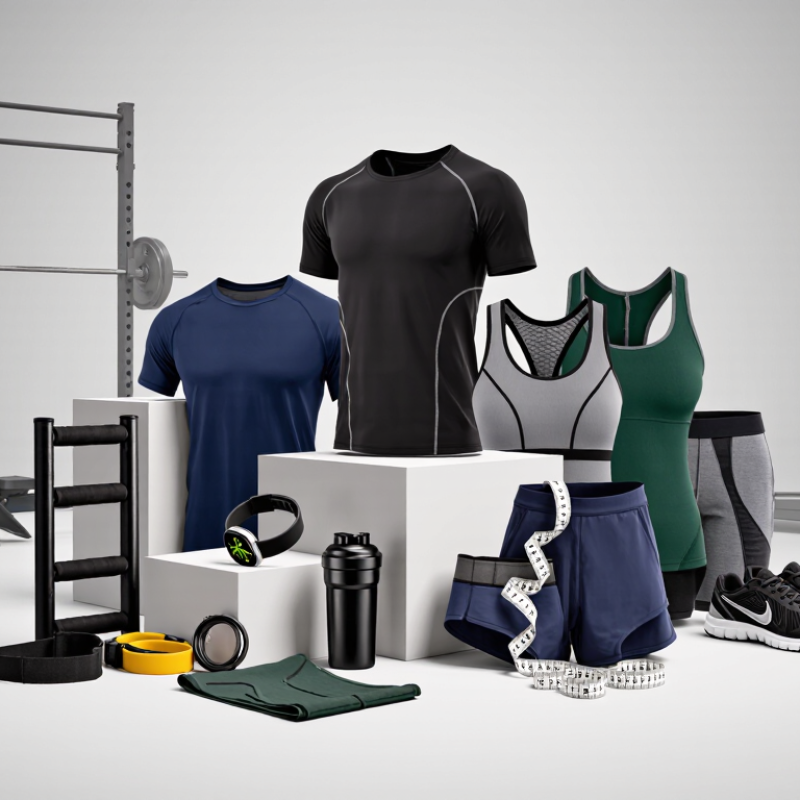
Top Cross Training Gym Apparel Suppliers for Global Buyers

Global Market Context: Sports Apparel Hit $203.03B in 2023 (GVR)

The global sports apparel market was valued at $203.03 billion in 2023, according to Grand View Research (GVR). That figure covers a broad category, not cross-training apparel alone. For global buyers, it shows the scale of the wider market, but it does not guarantee demand for any particular product. Regional preferences, climate, and retail channels can shape what sells. Details matter.

Cross-training garments face repeated stretching, sweat, and friction, so buyers should assess fabric recovery, seam strength, and fit during movement. Ask potential suppliers for material specifications, size charts, and production samples. A sample can look convincing on a hanger and still feel restrictive during overhead lifts. Test it in realistic training conditions. Fit varies across markets, and one grading approach may not suit every customer. It is tempting to judge suppliers by unit price alone, but minimum order quantities, lead times, and quality checks also affect the final cost. Some details may only become clear after a trial order, which is an imperfect but useful way to learn.

Product Specifications: Apply ISO 12947 Abrasion and ASTM D4966 Tests

For cross-training apparel, abrasion data can reveal whether fabric tolerates repeated contact with benches, mats, and equipment. Textile Exchange’s Materials Market Report 2024 estimates global fiber production reached 125 million tonnes in 2023. That scale makes clear, comparable specifications valuable to global buyers. ISO 12947-2 assesses textile breakdown using the Martindale abrasion method; ASTM D4966 also describes Martindale abrasion-resistance testing. Suppliers should state the test method, fabric face tested, applied pressure, and endpoint—not just a cycle count. Small details matter.

Ask for reports tied to the actual fabric lot, with conditioning and test settings recorded. Compare like with like: results from different procedures or pressures may not be directly interchangeable. One awkward truth: strong abrasion resistance does not prove resistance to pilling, seam failure, or stretch loss. These need separate checks. Not a guarantee.

A useful supplier specification sets a buyer-defined performance threshold, then confirms it through repeat testing on production samples. Requesting raw results, rather than a pass label alone, makes discrepancies easier to investigate. That extra review can feel tedious, but it may prevent a garment that looks sound in a swatch from wearing thin at the knees or hips.

Supplier Types: Compare OEM, ODM, Private-Label and Vertically Integrated Makers

For global gym apparel buyers, supplier type shapes control, speed, and product risk. OEM makers produce to your designs, measurements, fabric choices, and construction notes. This suits teams with clear tech packs and staff who can approve samples. Ask how they check squat opacity, seam strength, and size consistency across runs. Small details matter.

ODM suppliers offer existing patterns and fabrics that can be adjusted with colors, trims, or fit changes. This can shorten development, but the base pattern may not suit every body or movement. Request a wear-test sample for lunges, jumps, and overhead work, not just a studio photo. Private-label options often provide ready-made styles with your chosen labels and packaging. They can support a quick launch, though design differentiation may be limited.

Vertically integrated makers manage more stages in-house, from fabric development through cutting and sewing. That may improve coordination, but it does not guarantee better quality or delivery. Verify which processes are actually internal, then compare dated samples, defect records, minimums, and reorder timelines. A factory's answer may sound polished. Keep room for revision. A first sample rarely tells the whole story, especially after repeated washing or a larger production run.

Top Cross Training Gym Apparel Suppliers for Global Buyers

Supplier Types: Compare OEM, ODM, Private-Label and Vertically Integrated Makers

Supplier type How the model works Product development and customization Typical order and cost considerations Buyer control and key checks Best suited to
OEM (Original Equipment Manufacturer) The buyer provides the design, specifications, or approved tech pack; the factory manufactures to those requirements. Can support custom fabrics, fit, construction, colors, and trims. The buyer generally leads product design and specification decisions. Custom fabric and trim requirements may create higher minimums or added development costs. Sampling and production timing depend on material availability and order complexity. Agree in writing on specifications, tolerances, testing, defect handling, confidentiality, and ownership or permitted use of designs and tooling. Brands with established designs, technical specifications, and a need for close control over product details.
ODM (Original Design Manufacturer) The supplier offers existing designs or product platforms that the buyer can select and adapt. Customization may include colors, logos, labels, fabric options, or selected fit and trim changes. The available scope depends on the supplier’s product library. Using an existing design can reduce the need to develop a product from scratch. Custom materials or substantial changes may increase minimums, cost, and lead time. Check whether designs are exclusive or available to other buyers, and clarify who owns any buyer-funded modifications and artwork. Buyers seeking a faster route to a differentiated range without developing every garment from the ground up.
Private-label supplier The buyer sells products under its own label, usually using supplier-developed styles or ready-made garments. Often supports branding such as labels, hangtags, and printed or embroidered logos. Garment-level changes vary and may require a custom order. Ready-made or standard styles may have lower entry requirements than fully custom development. Branding, packaging, and garment changes can affect minimums and pricing. Confirm whether products are stock styles or made to order, and review labeling, packaging, compliance documentation, and replenishment availability. New or growing businesses that want branded apparel with limited product-development resources.
Vertically integrated maker One organization controls several production stages, which may include fabric development or knitting, dyeing, cutting, sewing, and finishing. Coordination across stages can help with material and production planning. The degree of design support and customization still depends on the maker’s capabilities. In-house control may simplify coordination, but it does not automatically mean lower prices, smaller minimums, or faster delivery. Capacity and material commitments should be checked. Map which stages are genuinely in-house and which are subcontracted. Request clear quality controls, traceability details, and stage-by-stage lead-time information. Buyers prioritizing production oversight, supply-chain visibility, or coordinated development across multiple manufacturing stages.

Note: These are general sourcing-model characteristics, not guaranteed supplier terms. Minimum order quantities, prices, capabilities, and lead times vary by product, materials, factory capacity, and destination market. The categories can overlap: a vertically integrated maker may also provide OEM or ODM services.

Factory Screening: Check ISO 9001 Systems and OEKO-TEX Certification

For cross-training apparel, factory screening should begin with the systems behind each sample, not a polished capability deck. Ask how the supplier controls fabric inspection, cutting, sewing, and final checks. An ISO 9001 certificate can indicate a documented quality management system, but it does not guarantee every garment will meet your specifications. Check the certificate’s validity, issuing body, and site address. Small details matter.

Then review the OEKO-TEX certification and confirm that its scope matches the materials and products you plan to buy. Request the certificate number and verify it through the official certification directory. Check whether the listed product class and covered items fit your order. A certificate for one fabric or product range may not cover every color, trim, or finished garment. Paperwork can look reassuring; it is not the fabric.

For leggings and training tops, compare approved documents with production samples, including labels, seams, and elastic components. Ask who tracks changes when a mill, dye process, or trim supplier changes. A clear answer suggests better control, though follow-up checks are still useful. No certificate replaces a careful review of the actual production lot. And some gaps only become visible after a few pointed questions.

Buyer Scorecard: Compare MOQ, Lead Time, Capacity and the 6.7% Market CAGR Forecast (GVR)

Global buyers need a scorecard that tests delivery, flexibility, and product consistency—not just quoted prices. Compare suppliers on minimum order quantity (MOQ), lead time, and monthly capacity. Record each figure beside the product type, fabric, and order size it covers. Ask whether the MOQ applies per style, color, or size range; these details can change the real entry cost. Small test orders matter.

Lead time should include sampling, fabric sourcing, production, and inspection, with delays discussed plainly. Capacity claims need context: ask how many sewing lines support active orders and what happens during seasonal peaks. Request recent production records or sample approval timelines where available. GVR forecasts a 6.7% compound annual growth rate for the relevant market, but a forecast is not a purchase guarantee. Treat it as a planning signal, then check whether a supplier can scale without weakening fit or stitching. A tidy spreadsheet may still hide uncertainty, especially when capacity figures lack a time period. Check the seams.

FAQS

What should I check before choosing a factory?

Ask how it inspects fabric, controls cutting, checks stitching, and reviews finished garments. A polished presentation is not enough.

Does a quality management certificate guarantee consistent garments?

No. Check its validity, issuing body, and factory address. Then compare the documented process with actual samples.

How can I verify a textile safety certificate?

Request its certificate number and check the official directory. Confirm the listed product scope matches your fabrics and finished items.

Does one certificate cover every color and trim?

Not necessarily. Coverage may differ by material, color, trim, or product range. Check the details against your order.

What should I inspect on leggings and training tops?

Compare samples with approved documents. Look closely at labels, seams, and elastic components. Check the seams.

How should I compare factory minimums and delivery times?

Record minimum order quantities, lead times, and monthly capacity beside each product and fabric. Ask whether minimums apply per style, color, or size range.

What should a realistic lead-time estimate include?

It should cover sampling, fabric sourcing, production, and inspection. Ask how seasonal peaks could affect delivery.

How can I judge a factory’s production capacity?

Ask how many sewing lines support active orders and request recent production records. Capacity figures without a clear time period can mislead.

What does a 6.7% market growth forecast mean for buyers?

Treat it as a planning signal, not a sales promise. Confirm the factory can scale without weakening fit or stitching.

Are certificates and production records enough?

They help, but they cannot replace checking the actual production lot. I would still recheck samples; paperwork can leave gaps.

Conclusion

As global demand for activewear grows, cross-training gym apparel offers buyers an opportunity to serve customers seeking durable, comfortable clothing for varied workouts. The sports apparel market reached $203.03 billion in 2023, according to the figures cited in this outline, and its projected 6.7% compound annual growth rate provides useful context for long-term sourcing plans. Product evaluation should consider abrasion resistance, using methods such as ISO 12947 and ASTM D4966, alongside fit, fabric performance, and construction quality.

Supplier options include OEM, ODM, private-label, and vertically integrated manufacturers, each offering different levels of design input, production control, and customization. Before placing an order, buyers can screen factories for documented ISO 9001 quality systems and OEKO-TEX certification, then compare minimum order quantities, lead times, and production capacity. A consistent scorecard helps balance cost, reliability, and product requirements, making supplier selection more objective as market demand evolves.

Aveline

Aveline

Aveline is a professional marketing specialist dedicated to helping customers understand innovative products, practical applications, and emerging industry trends. With extensive knowledge of the company’s product portfolio, she combines market insight, clear communication, and a strong......