Choosing among China’s top sublimated football kits manufacturers takes more than comparing prices. Buyers need to examine print clarity, fabric performance, sizing consistency, and production communication. A sharp crest should stay crisp across the chest, while the jersey still feels light after a full match. Small details matter.
Sportswear sourcing specialist Adrian Lin puts it this way: “A reliable kit is proven in the details: color consistency, comfortable fabric, and a sample that matches the final order.” Use that principle when assessing sublimated football kits. Ask manufacturers about fabric weight, moisture management, color approval, sample timelines, and quality checks. Requesting a physical sample can reveal issues that a product photo may hide.
Clear questions help. So does a written specification. Yet the process is not always neat. A promising sample may still differ from bulk production, and timelines can shift when artwork changes. Buyers should confirm revisions, delivery expectations, and inspection steps before approving an order. These checks make comparisons more useful than a low quote alone. They also help teams avoid unpleasant surprises, such as mismatched shades across player and goalkeeper kits.
This guide introduces manufacturers serving buyers who value customization, dependable communication, and practical production standards. It also considers where questions remain. No supplier is right for every club, budget, or season. The best choice is the one that can demonstrate its capabilities clearly—and discuss limitations honestly.
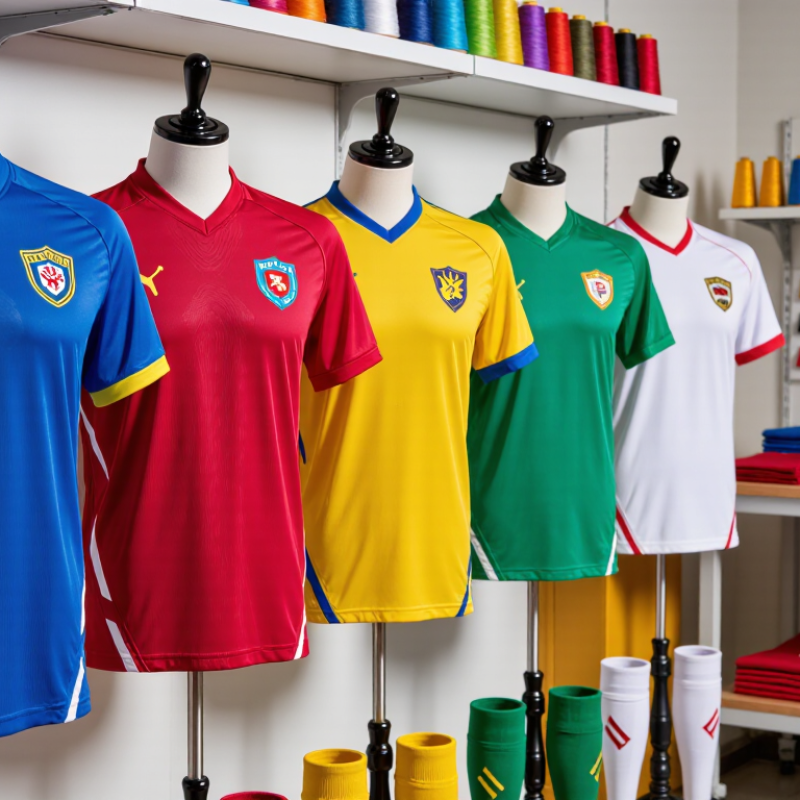
Sublimated football kits use heat to transfer dye into the fibers of polyester fabric. Unlike surface printing, the color becomes part of the material. No peeling layer. This method allows team colors, numbers, and detailed patterns to appear across the shirt. Most kits start with white fabric because sublimation does not add white ink over darker cloth.
During production, a design is printed onto transfer paper, then pressed against the fabric under controlled heat and pressure. The dye turns into gas and bonds with the polyester fibers. After cooling, panels are cut and sewn together. Fit and fabric weight matter too: a vivid print cannot compensate for seams that rub or a shirt that feels heavy during play. One detail can be overlooked—the printed panels may look slightly different under indoor and outdoor lighting.
Tips: Ask for a fabric sample and wash-test it before ordering a full run. Check color consistency, seam finishing, and sizing measurements. Keep artwork clear and provide vector files when possible. Small text can blur. Good suppliers should explain their print process and confirm the final design before production.
| Topic | What It Means | How It Relates to Sublimated Football Kits | What Buyers Should Check |
|---|---|---|---|
| Sublimation printing | A heat-transfer process that uses disperse dye to color suitable synthetic fibers. | Heat turns the printed dye into a gas that bonds with the polyester fibers, making the design part of the fabric rather than a separate surface layer. | Confirm the fabric is suitable for sublimation and request a physical sample to assess color, hand feel, and print quality. |
| Common fabric base | Polyester is commonly used because its fibers can accept disperse dyes. | Football shirts and shorts may use different polyester constructions, such as smooth knit or mesh, depending on the intended feel and garment design. | Ask for the fiber composition and details of the fabric construction. Do not assume that every fabric described as “sports fabric” has the same properties. |
| Design and artwork | Artwork is prepared digitally and arranged to fit the garment pattern pieces. | Names, numbers, colors, patterns, and sponsor graphics can be incorporated into the printed panels before the garment is sewn. | Approve the artwork layout, spelling, number placement, size chart, and color references before production begins. |
| Printing and heat transfer | The design is printed onto transfer paper and then transferred to the fabric using heat and pressure. | Transfer conditions depend on the fabric, ink, paper, and equipment. There is no single temperature or pressing time that applies to every production setup. | Ask the supplier how production settings are tested for the selected material, and review a sample made with the intended fabric. |
| Color and white areas | Standard dye sublimation colors the fabric but does not deposit opaque white ink. | White areas in a design are generally created by leaving the white fabric unprinted. The base fabric color can affect the final appearance. | Confirm the base fabric color and check a physical color sample. A screen preview alone may not accurately represent the finished garment. |
| Cutting and sewing | Printed fabric panels are cut according to patterns and assembled into garments. | Accurate panel alignment matters where artwork crosses seams or continues from one panel to another. | Check seam placement, stitching, garment measurements, and pattern alignment on a production sample. |
| Typical kit components | A football kit commonly includes a shirt and shorts; socks may be ordered as a separate or coordinated item. | Each component may use a different fabric or construction, so print appearance and fit can vary across pieces. | Specify which items are included, the size range, quantities by size, and whether socks or other accessories are part of the order. |
| Quality checks | Inspection can cover measurements, seams, print appearance, and order details. | Checking samples and finished garments helps identify issues such as misplaced graphics, inconsistent sizing, or sewing defects. | Agree on inspection criteria, approved samples, tolerances, labeling, and packaging requirements before confirming an order. |
| Care and durability | Care instructions depend on the garment materials, construction, and any added trims or applications. | The sublimated design is integrated with the polyester fibers, but garment life still depends on fabric quality, construction, use, and care. | Request care instructions for the finished product and check that labels and packaging match the agreed specifications. |
| Manufacturer evaluation | A supplier should be assessed on its ability to meet documented product and order requirements. | Relevant capabilities may include artwork preparation, fabric sourcing, sampling, printing, garment assembly, and inspection. | Compare written specifications, samples, production timelines, communication, quality procedures, and applicable compliance documents. Verify claims independently. |
Heat transfers dye into polyester fibers, making the color part of the fabric. There is no raised layer to peel.
A design is printed onto transfer paper and pressed against the fabric with controlled heat and pressure. The dye bonds with the fibers, then the panels are cut and sewn.
Sublimation does not add white ink over darker cloth. A white base helps colors and detailed patterns show clearly.
Wash it, check the sizing, and inspect the seams around the collar and underarms. Note any shrinkage or color changes. Samples help, but they cannot guarantee every bulk lot.
Ask how artwork placement is checked across different sizes. Digital templates can help, but small shifts may still show on the pitch.
Fit, fabric weight, stretch, and mesh placement all matter. Rough seams can rub during movement. Easy to overlook.
Yes. Indoor and outdoor lighting may make printed panels look slightly different. Compare samples under the lighting where the kits will be used.
Confirm size ranges, order quantities, sampling dates, and production windows. Ask who handles corrections and replacement timing if defects appear.
Small text may blur, so keep artwork clear and provide vector files when possible. Late design changes can also disrupt production timing.
Sublimated football kits are made by printing designs directly into fabric using heat, allowing colors, patterns, and team details to become part of the material rather than sitting on top. China’s manufacturing landscape includes suppliers with different production scales and areas of expertise. Leading manufacturers may offer in-house design support, fabric selection, sampling, printing, sewing, and inspection, helping buyers develop kits that meet their performance and appearance requirements.
Before placing an order, buyers should assess a supplier’s experience, communication, sample quality, material specifications, and quality-control process. It is also helpful to confirm sizing, color consistency, production capacity, minimum order quantities, lead times, and payment terms. For customization and export, buyers should provide clear artwork and product specifications, approve samples before bulk production, and agree on packaging, shipping arrangements, and delivery schedules. Careful preparation can make sourcing sublimated football kits more predictable and help reduce misunderstandings during production.